A session with WarrCloud's Jim Roche and Sam D'Arc, aka Car Dealership Guy
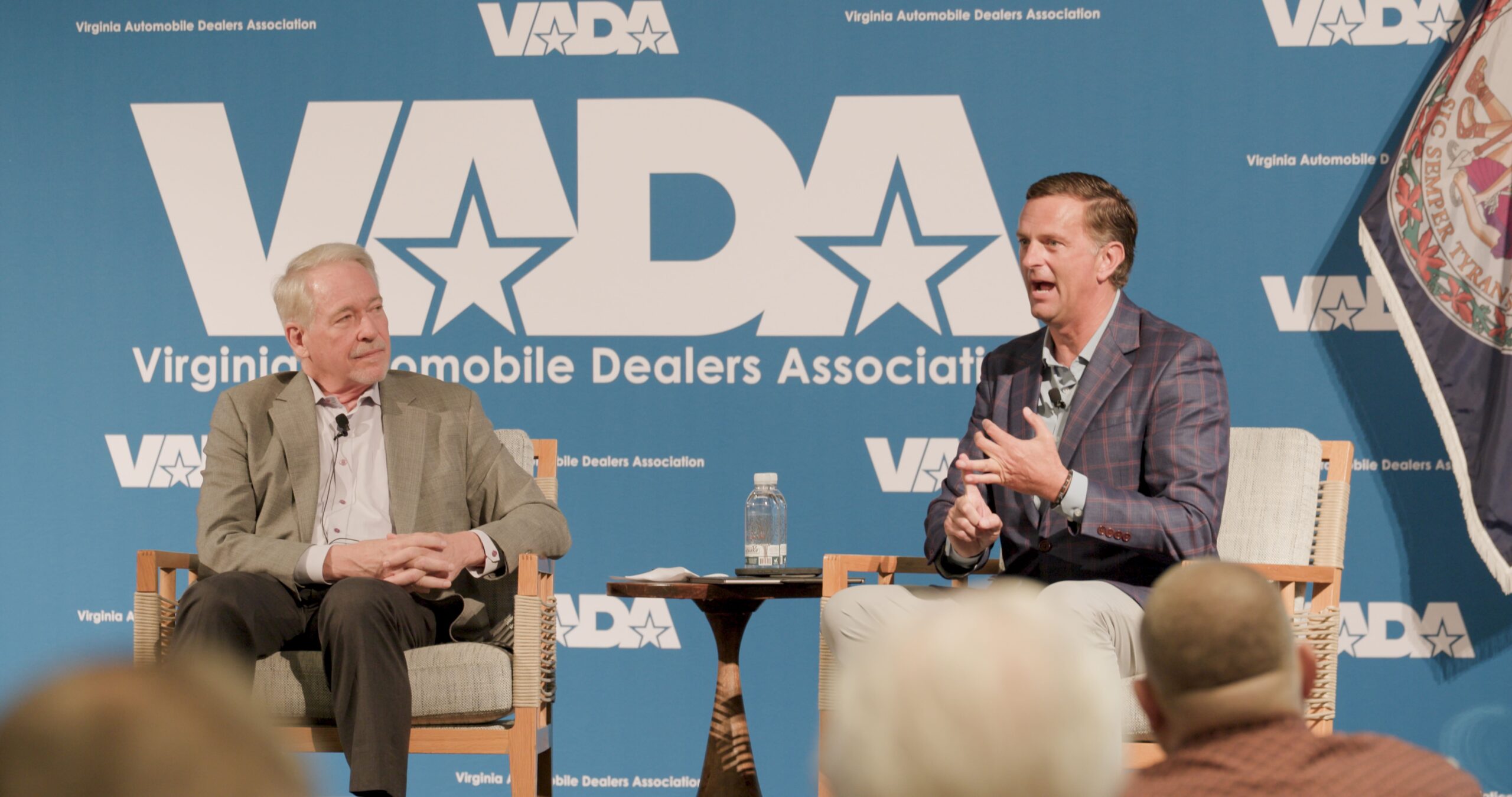 Our first day at VADA '26's General Session brought insights from Jim Roche, founder and CEO of WarrCloud. A 30-year veteran of the automotive industry, Jim is a pioneer in using technology to streamline fixed operations and improve the service experience.
At WarrCloud, he's working to automate the complex warranty claims process, reducing costs and speeding up payments for dealers. During the session, he and Sam D'Arc, COO of Zeigler Auto Group, discussed how automation is reshaping the service lane and unlocking new profitability for dealerships.
Quoting Don Flow, owner and CEO of Flow Automotive Companies, Roche said: "Historically we are a people industry that's been augmented by technology. What we're evolving to is a technology business that's augmented by people."
Here are 10 takeaways from their talk.
1. Fixed ops is thriving — but there are cracks beneath the surface.
Service revenue and profits continue to rise, but much of that growth is being driven by warranty work and higher labor rates. Customer-pay repair orders have remained largely flat, and dealers are losing share of overall service visits. As D'Arc put it, this is a "problem hiding in plain sight."
2. Warranty is one of the biggest growth engines in the dealership.
Between increasing recalls, more technology-packed vehicles and strong new-vehicle sales over the past several years, warranty revenue has surged. Roche noted that warranty revenue has grown nearly 34% in two years and said he expects that trend to continue. "Warranty is, I think, a very important revenue stream in service."
3. Customer-pay business deserves more attention.
While total service revenue is growing, customer-pay revenue is not growing at the same pace. Dealers should be careful not to mistake higher labor rates for stronger customer retention. D'Arc warned that many stores are seeing revenue rise while "RO count [is] down," creating a long-term risk if customers stop returning.
4. Warranty administration remains surprisingly inefficient.
Only about 73% of warranty claims are paid as submitted the first time. The rest require additional work, creating delays, extra labor and missed revenue opportunities. Roche argued that dealers should rethink traditional processes and use technology or outsourcing to improve efficiency.
5. Recalls are more than a compliance issue — they are a customer acquisition tool.
Dealers should use technology to identify every open recall in their market area and customer database. Each recall creates an opportunity to bring a vehicle into the service lane and build a relationship with the owner. D'Arc noted that recalls create opportunities to connect with customers who may have never serviced with the dealership before.
6. Consumers still believe dealerships cost more.
Whether that perception is accurate or not, it continues to influence service decisions. Roche called it "our best-kept secret" that many dealerships are far more price-competitive than customers realize. "We do a terrible job as an industry of telling anybody."
7. Dealerships should lean into their technical expertise.
Today's vehicles are more complex than ever. Roche cited a statistic that the average modern vehicle contains four times more computer code than an F-35 fighter jet. His advice: market the expertise, training and tools available at the dealership because "consumers, when they perceive that their vehicles are high tech, tilt toward the dealer."
8. Video multi-point inspections (MPIs) continue to deliver results.
The presenters pointed to strong data showing higher customer engagement, increased repair-order value and better customer satisfaction when video inspections are used consistently and effectively. D'Arc called video MPIs "one of the toughest things to implement" but also "one of the most simple processes" with some of the biggest returns.
9. AI is becoming a practical business tool, not a future concept.
From service scheduling and phone handling to warranty processing and customer communications, AI can help automate routine tasks and free employees to focus on customer relationships. Roche urged dealers to view AI as a core business capability, saying they should treat it "as a core operational discipline, not as an experiment."
10. Retention starts with the first service visit.
One of the simplest ideas discussed was also one of the most important: schedule the first service appointment before the customer leaves the dealership. D'Arc recalled teaching this practice years ago and emphasized that the first service visit helps create long-term loyalty. Roche pointed to data showing customers who regularly service at a dealership are far more likely to purchase their next vehicle there as well.