A Message from VADA President and CEO Don Hall
February 2026

At this month’s NADA Show in Las Vegas, and in my recent conversations with dealers and peers from across the country, one topic dominates: China.
As someone I know who has lived there for years and understands its political system recently told me, “We ought to be paranoid about China.”
China is the world’s second-largest economy, and it is hellbent on becoming No. 1. We can compete and win, but only if we do it the American way — by innovating, getting better at manufacturing, getting better at sales and service, controlling expenses and labor costs, and being smart about regulation.
As Chinese vehicles enter the U.S. over the next two decades, cars and trucks are merely the vehicles to American access and domination. Modern vehicles constantly collect and transmit sensitive data like location, driving patterns, and personal device information. And because Chinese law can require companies to share data with the government, we should all be asking who ultimately controls that information and how it will be used.
China understands the American consumer. They know we have a strong appetite for convenience, technology, and lower prices. They also know that economic dependence is one way to gain influence.
China already dominates global auto production, accounting for roughly 40% of worldwide capacity, compared with about 10% for the U.S. Most industry leaders believe Chinese brands will enter our market within the next few years, in part by building plants here to get around import tariffs. Chinese EV makers are already rapidly expanding into Europe and other global markets.
To be sure: Chinese-made vehicles are no longer junk. They look good. They are well-equipped. They are safe, fun to drive, and high quality — very different from the outdated reputation of older Chinese-made cars. In many markets, you can buy a technology-packed vehicle for $25,000 or $30,000. That is extremely difficult for American manufacturers to match.
That’s tempting for consumers and for dealers. Lower sticker prices mean more sales, and new brands create curiosity (one of my own staffers is ready to buy a BYD truck when it comes stateside, leading to a slap on the wrist from yours truly).
But too often, our industry focuses on the next 30 days instead of the next 30 years.
It’s also important to understand how China’s auto industry works. Major manufacturers are state-owned or controlled by the Chinese Communist Party. Even private companies operate within a system shaped by government policy and financing. On top of that, China dominates the supply and processing of rare earth materials that power EV motors and components.
As the saying goes, China doesn’t need to fire a single bullet to overtake us.
We are seeing this play out at the highest levels. Ford CEO Jim Farley this month discussed a framework to allow Chinese automakers to build vehicles here through joint ventures with American companies.
On paper, that may sound reasonable. In reality, it mirrors the same model China once forced on Western manufacturers, but now the roles are reversed.
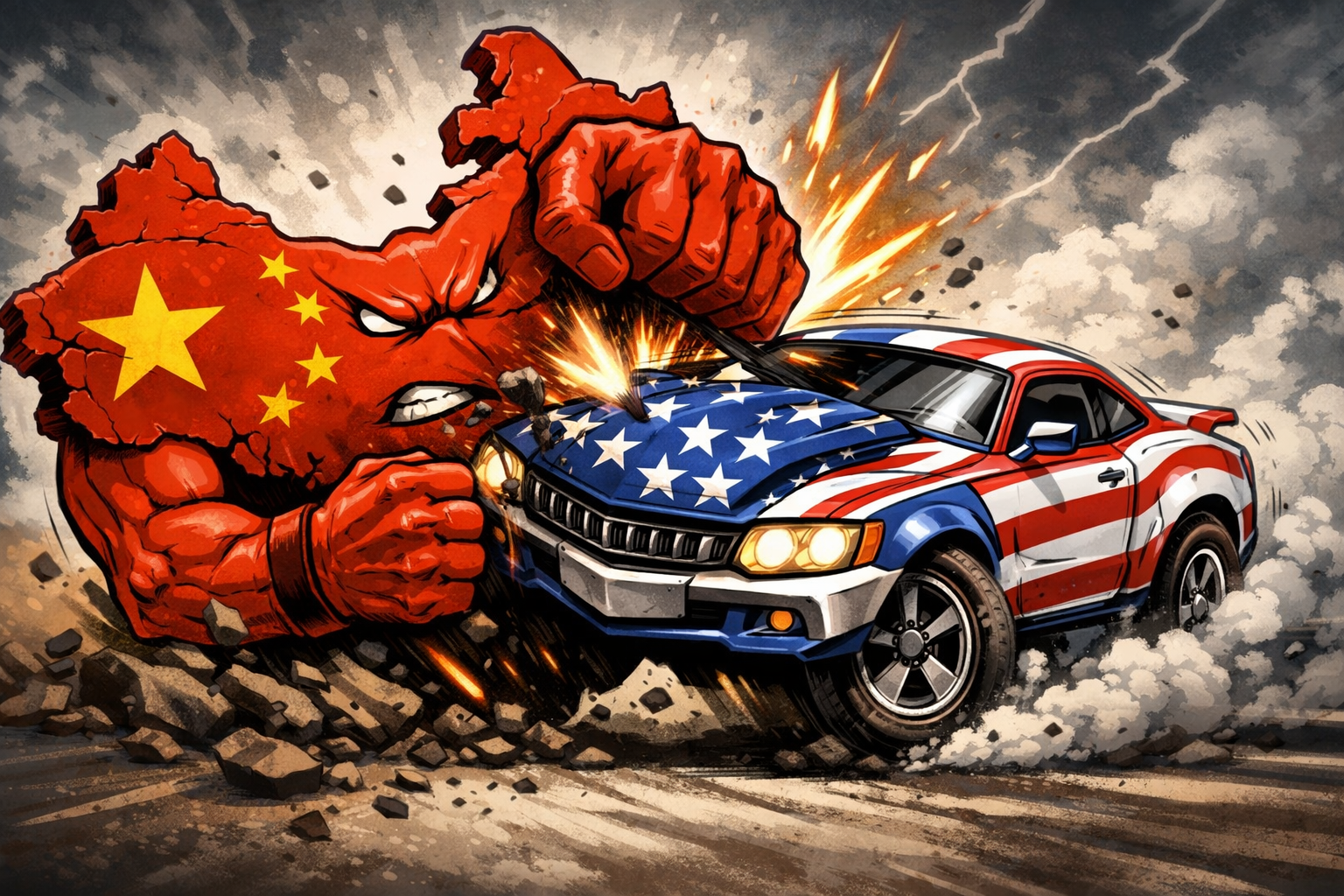
An automotive clash of the titans, coming soon to a country near you. (Image created by AI).
Even in a joint venture, Chinese companies gain access to our market, technology, data, and our workforce, while maintaining influence over key systems and supply chains. It may create short-term jobs, but it also raises serious economic and national security questions. “Made in America” does not mean “data controlled in America.”
If American manufacturing continues to weaken, the damage will extend far beyond dealership showrooms. Parts suppliers, service departments, and entire communities depend on this industry. Once that is weakened, it is very hard to rebuild.
China is a complex, long-term challenge that requires serious engagement from dealers, associations, and policymakers.
Ideally, we should say “Hell No” to China. But if that is not possible, we don’t have to throw in the towel either. We just have to be Americans about it.
Make sure your dealership is represented in Richmond on February 25th's Dealer Day at the Capitol.
Are you signed up for next week's Dealer Day at the Capitol?
If you have not...is someone from your store going to Richmond to join the many other Virginia dealers and dealership employees who will be there?
If so, who? If not, why not?
For a few hours of your time each year (plus a free lunch), Dealer Day gives Virginia's franchised auto dealers and their teams the opportunity to make a year-long impact. Lawmakers can't support bills that help the retail automotive industry if they don't meet dealership employees and hear our stories. On the flip side, they'll back legislation that harms our industry if they don't understand what they're voting for. Dealer Day is a day worth your time, so:
VADA Dealer Day at the Capitol 2026
Wednesday, February 25, 2026
Hilton Richmond Downtown
Start: 501 E. Broad Street
Richmond, VA 23219
11:30 a.m. - 4 p.m.