February 2, 2026
Policies taking shape amid the frozen tundra of Central Virginia
The third week of Virginia’s 2026 legislative session felt like a classic example of how legislation moves in the Commonwealth: quickly, relentlessly, and occasionally chaotically – especially when Mother Nature decides to get involved.
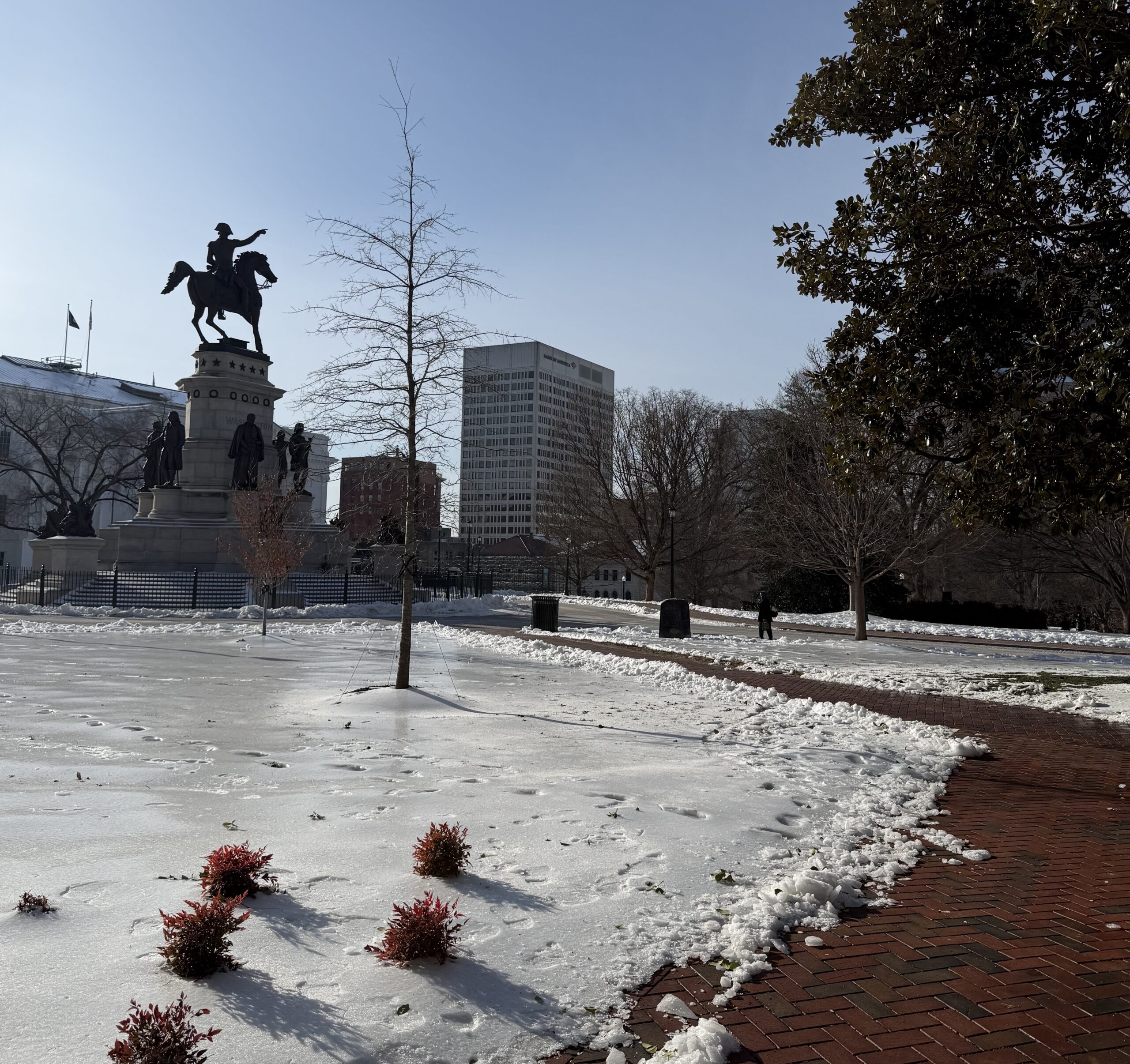
Legislators, lobbyists, and visitors to the General Assembly last week had to work their way through salty roads and slick sidewalks. Thankfully, a few pathways were cleared to make coming and going safe.
Despite the snow and ice storm that fell over Richmond last weekend, the 2026 General Assembly session continued full speed ahead while moving the first batch of bills through the House of Delegates and Senate. This phase of session is indicative of which bills may pass through the chambers easily with bipartisan support, which bills are going to be more contentious, which concepts need more shaping, and which policies are being prioritized by leadership — and ultimately funded.
Over the coming 40 days, the tough policy work will take place – negotiations between the House and Senate, policy refinement behind the scenes, and ultimately the budget discussions will determine which ideas cross the finish line.
Policy landscape taking shape
Among the broader policy considerations, this week’s conversations continued to center around a few themes: consumer protections, labor policies, tort reform, tax reform, data privacy, transportation costs, and clean energy policies.
The Virginia Automobile Dealers Association’s government affairs team continues to track developments closely. This week’s update focuses on dealer-specific legislation, broader DMV and vehicle-related policy, and the continued discussion around transportation-related tax reform.
Steady progress on dealer-focused legislation
Week Three saw encouraging movement on a handful of dealer-specific bills aimed at practical policy reform and code modernization.
Two bills passed unanimously out of the Senate Transportation committee and the full Senate, which would provide dealers and customers with more flexibility when vehicles are undergoing lengthy repairs.
- SB440 extends the period for which a customer can use their own license plate on a courtesy vehicle while their automobile is in a dealer’s repair shop from 5 days to 30 days.
- Similarly, if the customer uses a license plate on a vehicle other than their own when their vehicle is in the repair shop, SB441 extends the period that a special permit can cover the plate from 5 days to 30 days.
On the House side, three dealer-specific bills also moved unanimously through subcommittees and the full committee and will soon head to the House floor for consideration.
- HB570 removes outdated language from the Code of Virginia, which requires dealers to obtain approval from the Motor Vehicle Dealer Board prior to storing records electronically.
- HB586 clarifies that dealers are to notify the Motor Vehicle Dealer Board, not the Department of Motor Vehicles, when filing business hour changes.
- HB608 removes the prohibition against the use of dealer tags on vehicles delivering or transporting vehicle parts, accessories, or fuel.
Broader DMV and vehicle-related issues
Beyond dealer-specific legislation, several DMV and vehicle-related measures advanced this week out of Senate Transportation.
- SB135 would allow the DMV to join a national vehicle title database to share motor vehicle owner and lienholder information as an effort to crack down on title washing and title fraud.
- SB595 would allow the DMV to share mechanics or storage lien information against vehicles titled in other jurisdictions with holders of the vehicle.
- SB17 seeks to limit petitions for court orders for the sale of abandoned vehicles by updating the monetary cap on vehicles that may be sold at public auction from $12,500 to $17,000.
- SB506 authorizes the application of clear films to vehicle windshields so long as the film does not impair visibility.
- SB670 puts forth a regulatory and licensure framework for commercial fully autonomous vehicles.
At the outset of session, we were looking forward to hearing HB219, which would have provided a licensing and registration framework for tiny "kei" vehicles. However, legislators voted to put this one off another year.
Transportation funding and taxes: What’s happening?
Tax reform related to transportation funding remains one of the consequential and complex discussions unfolding this session.
As discussed at VADA’s December legal and legislative updates, we anticipated a group of lawmakers entering the 2026 session prepared to revisit how Virginia funds major transportation systems, particularly public transit in Virginia’s most dense districts. The conversation stems from a joint subcommittee study initiated by 2024 legislation which sought solutions for a long-term, sustainable, and dedicated funding source for the Washington Metropolitan Area Transit Authority, the Virginia Railway Express, and the public transit systems serving the Northern Virginia Transportation Commission and the Potomac and Rappahannock Transportation Commission. The subcommittee formally transmitted its recommendations to legislators in November 2025, which included a request for significant funding from the state.
Several legislative proposals now on the table reflect different solutions to addressing the funding gap.
The Sullivan and Surovell Method
HB900 and SB730 are identical companion bills which outline one potential plan for revenue to fund the study’s requests. Here’s what the method from Del. Richard C. "Rip" Sullivan (D-McLean) and Sen. Scott Surovell (D-Mount Vernon) proposes:

Surovell
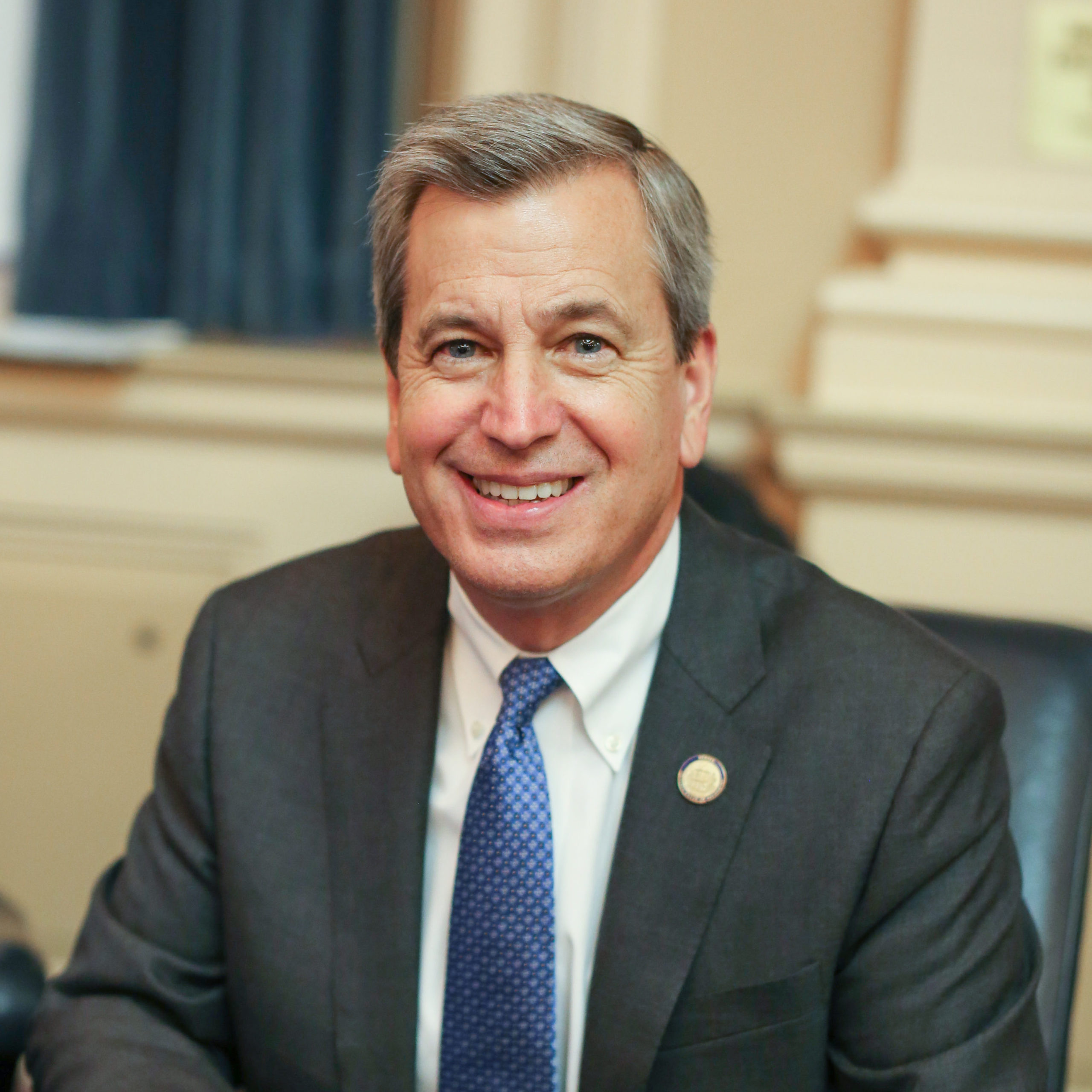
Sullivan
A statewide decrease in the sales and use tax rate, from 4.3% to 4%, with an expansion of the sales and use tax base, including services and digital personal properties.
- The proposed tax services include: Event and entertainment admissions; charges for recreation, fitness, sports facilities, including membership fees/dues; nonmedical personal services or counseling; dry cleaning and laundry services; companion animal care; residential home repair, maintenance and landscaping; residential cleaning services; vehicle and engine repair, maintenance, cleaning, painting, and remodeling; repairs, alterations, or storage of tangible personal property; delivery or shipping services; travel and event aesthetic planning services and digital services.
- A statewide 29.34% increase of the highway use fee on vehicles currently subject to the highway use fee.
The method also proposes additional increased taxes for Northern Virginia Transportation Commission (NVTC) localities only:
- A retail sales and use tax rate increase for localities that are members of the NVTC at 0.385%, and for localities embraced by the NVTC, but non-members at 0.615%.
- A retail delivery fee of $0.20 for each delivery made within a NVTC locality
- A retail sales and use tax increase at 0.2% for Potomac and Rappahannock Transportation Commission (PRTC) localities.
The Tran and Ebbin (Boysko) Method
HB1179 and SB638 are another set of identical companion bills which outline a second proposed plan for revenue to fund the aforementioned study’s requests.
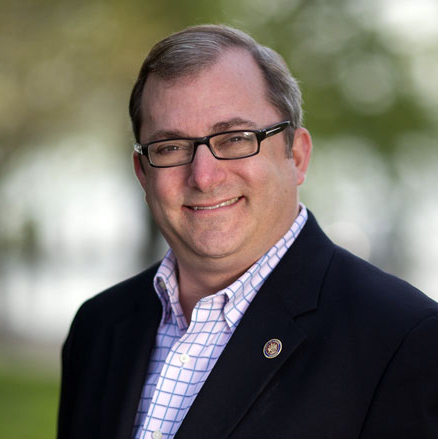
Ebbin
Here’s what the method from Del. Kathy K.L. Tran (D-Springfield), Sen. Adam Ebbin (D-Alexandria) and Sen. Jennifer Boysko (D-Herndon) proposes:
- A statewide 29.34% increase of the highway use fee on vehicles currently subject to the highway use fee.
- A statewide $0.50 fee on each retail delivery made in Virginia.
- A statewide 4.3% tax on gross proceeds derived from rideshare fares for all rides in Virginia.
Similar to the Sullivan and Surovell method, the Tran/Ebbin/Boysko method proposes increased taxes and fees for Northern Virginia Transportation Commission (NVTC) localities only:
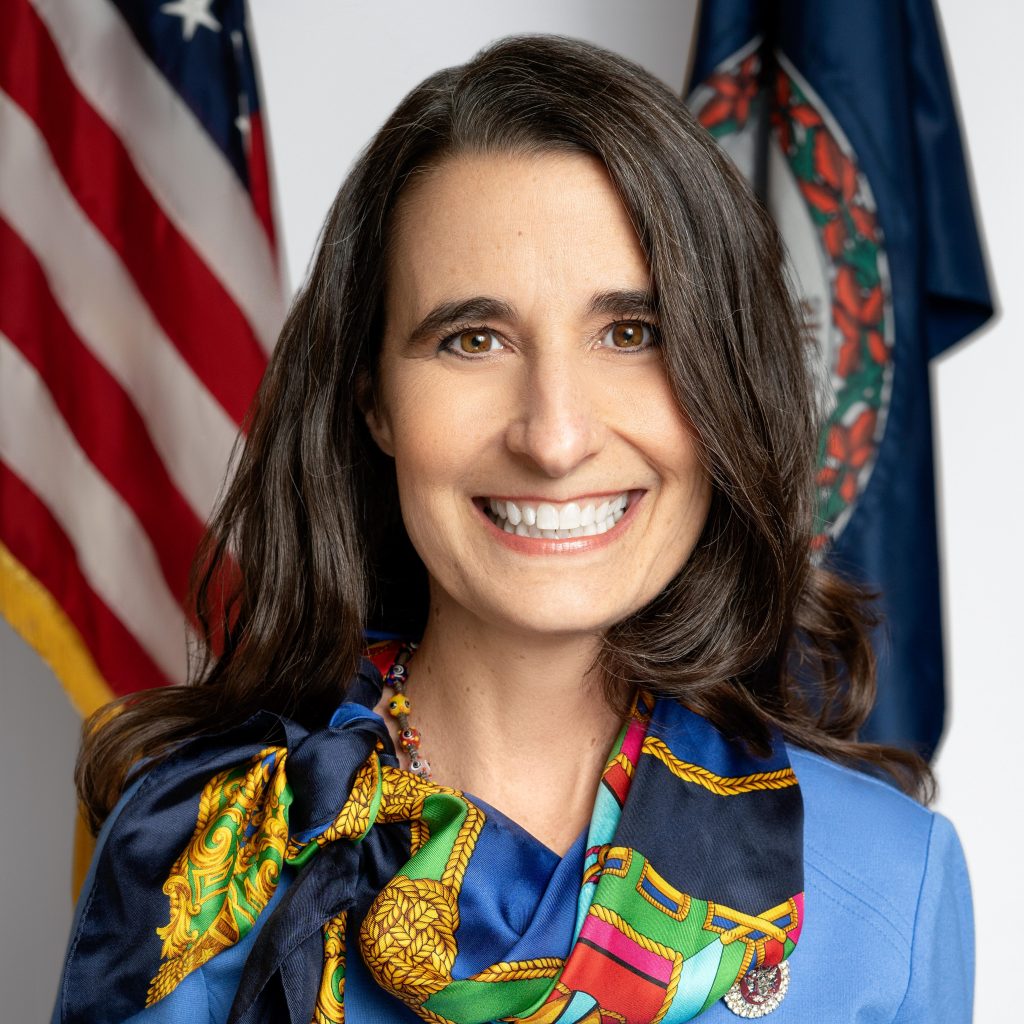
Boysko
- An additional .2% retail sales and use tax.
- A $0.25 fee for retail deliveries made in the subject localities.
- An additional 29.34% increase of the highway use fee on vehicles currently subject to the highway use fee and principally garaged in a subject locality.
- A 1.9% tax on gross proceeds derived from rideshare fares for all rides from the subject localities.
- A 10% tax on public commercial parking lot charges on lots within the subject localities.

Tran
Like the other method, it too proposes increased taxes and fees for Potomac and Rappahannock Transportation Commission (PRTC) localities only:
- A 0.2% retail sales and use tax
- A 29.34% increase of the highway use fee on vehicles currently subject to the highway use fee and principally garaged in a subject locality.
The Watts Method
While the previous two methods only seek to fund transportation initiatives, the final proposed method, as outlined in HB978, also seeks to apportion additional funds to localities based on school-age populations and high-need student populations.
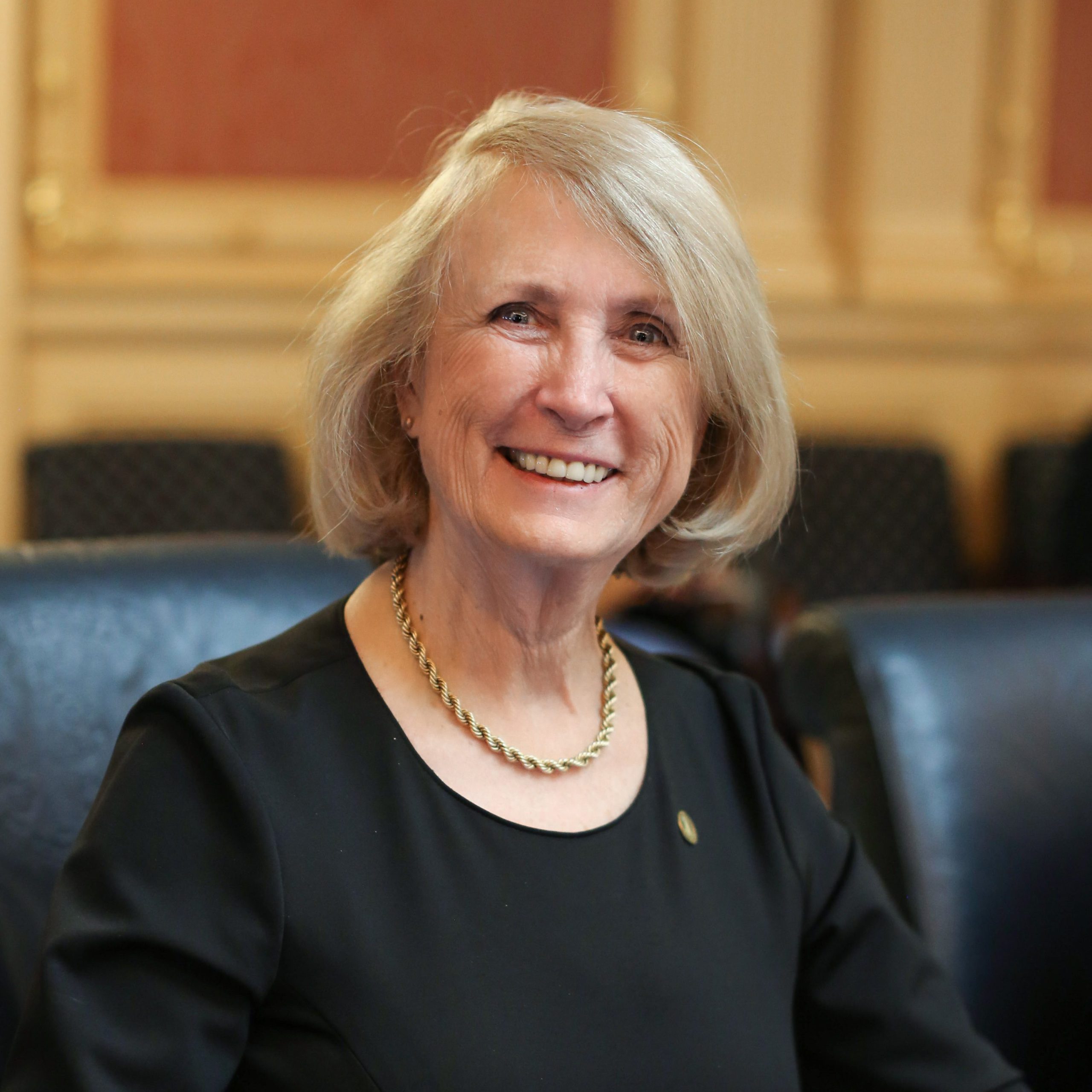
Watts
The method proposed by Del. Vivian Watts (D-Annandale) proposes an expansion of the sales and use tax base to include services and digital personal properties. The services included in the expanded tax base are the same as those proposed in the Sullivan and Surovell Method.
Virginia’s transportation funding tax proposal is back on the table for a multitude of reasons – but a few items stick out.
- First, the proposed 29.34% increase of the highway use fee in all three methods indicate that the gas tax isn’t working like it used to as more Virginian’s adopt more EVs and fuel-efficient vehicles (see Led by Hybrids, EV popularity rising in Virginia).
- Second, the differential regional taxes proposed point out the differences in transportation needs across the Commonwealth. Northern Virginians are facing chronic congestion and major transit infrastructure update needs, but less dense regions of Virginia aren’t facing these high-growth transportation issues at the same pace. Either way, it is clear that a one-size-fits-all funding system may not be the answer.
In the coming weeks we will bring you an update if any transportation tax reform policy begins to take shape.
The VADA team remains closely engaged and is monitoring which bills are gaining traction in the legislature.
As always, we’re grateful to the dealers who have taken the time to go in depth on policy considerations with us as we work through the session – bringing your voice to the table is our legislative priority.
Reminder: Dealer Day moved to Wednesday, February 25
Due to weather, Dealer Day on the Hill (previously scheduled for January 28) has been moved to Wednesday, February 25.
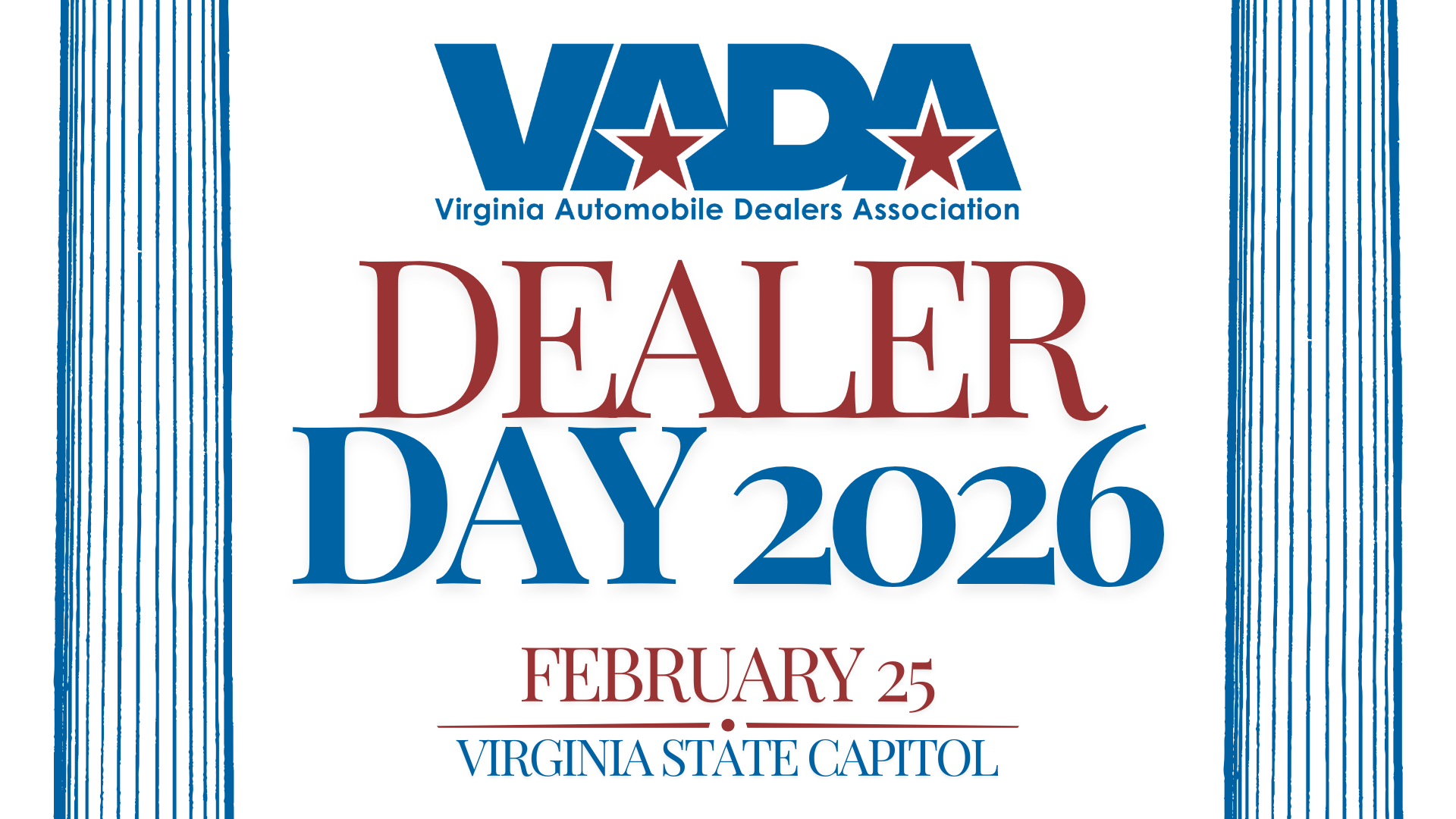
Leaders from every store in Virginia are encouraged to attend our annual Dealer Day at the Capitol, where we will meet face-to-face with lawmakers to explain to them the importance of the franchise system.
VADA Dealer Day at the Capitol 2026
Wednesday, February 25, 2026
(Then walking to meetings at the Virginia State Capitol)
Start: 501 E. Broad Street
Richmond, VA 23219
11:30 a.m. - 4 p.m.