February 9, 2026
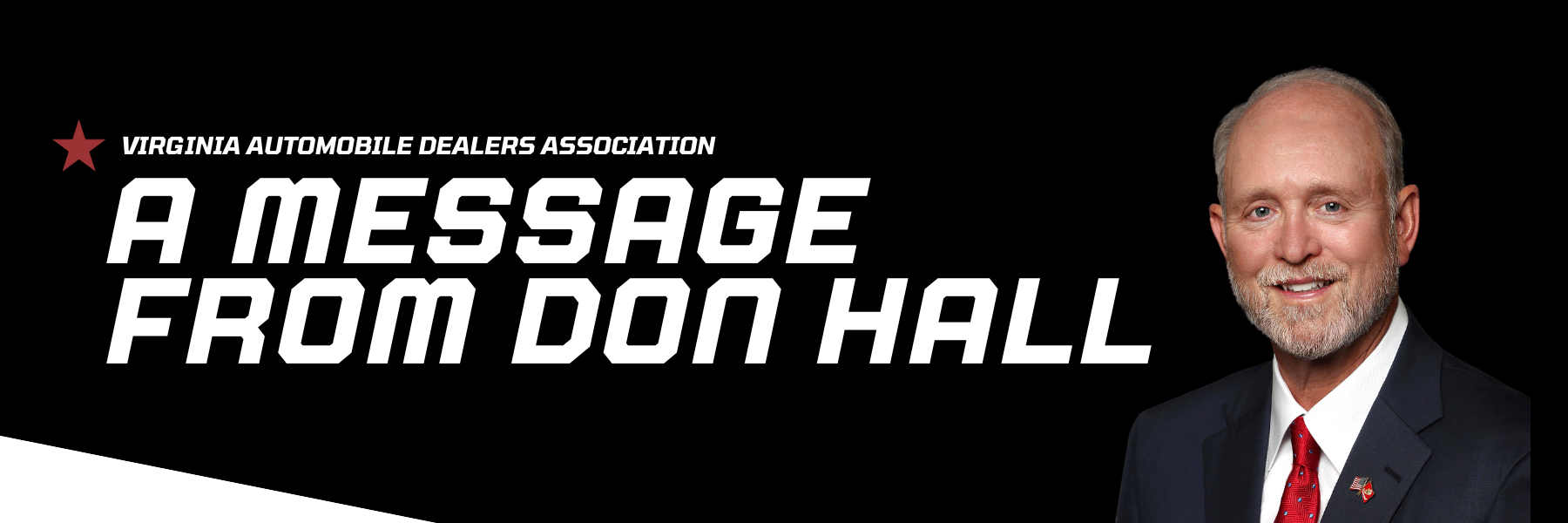
A General Assembly Message from VADA's Don Hall
 This week’s Capitol Briefs will fill you in on some of the legislation that may affect you as employers. Last week we covered some of the tax changes being considered. We have heard from some of you with your concerns about these measures.
We want to be clear: There is new leadership in Virginia after November’s sweeping election wins for Democrats. Those elections are shaping the policy discussions in Richmond. Also understand that the hyper-partisan nature of our politics means various third-party groups on both sides will tell you the sky is falling — when the real work is far from done.
Rest assured, VADA's legislative team is part of the discussions. We are working both on our own and with other business groups to shape policies that create fairness to all sides of these various issues — taxpayers and state financial needs, employers, and employees. No side will get everything they want. That is the legislative process in a nutshell.
We will continue to vigorously advocate for the best interests of our dealer members as the long and winding legislative process continues until the General Assembly adjourns in mid-March. -Don Hall, VADA President and CEO
Capitol Briefs 2026, Week 4: Bills look to reshape employer-employee relationship
Last week, with the midpoint “crossover” date of the 2026 legislative session quickly approaching, Virginia’s House and Senate moved aggressively to advance major pieces of legislation this week – particularly those related to employment and business.
One of the clear themes emerging this session: A broad effort to reshape the employer-employee relationship. Lawmakers are focused on strengthening Virginia’s workforce.
Many of these efforts are driven by real, day-to-day workplace pressures finally reaching a boiling point – be it labor shortages, retention challenges, or pay discrepancies. Legislators heard testimony from Virginia workers and businesses on all the above last week.
Here’s what’s moving – and what it could mean for you.
The Big Picture: Lawmakers expanding employee rights and workplace protections
Several bills advancing this session are part of a broader effort to support workforce stability and ensure that Virginia remains a competitive state for attracting and retaining talent.
Minimum Wage
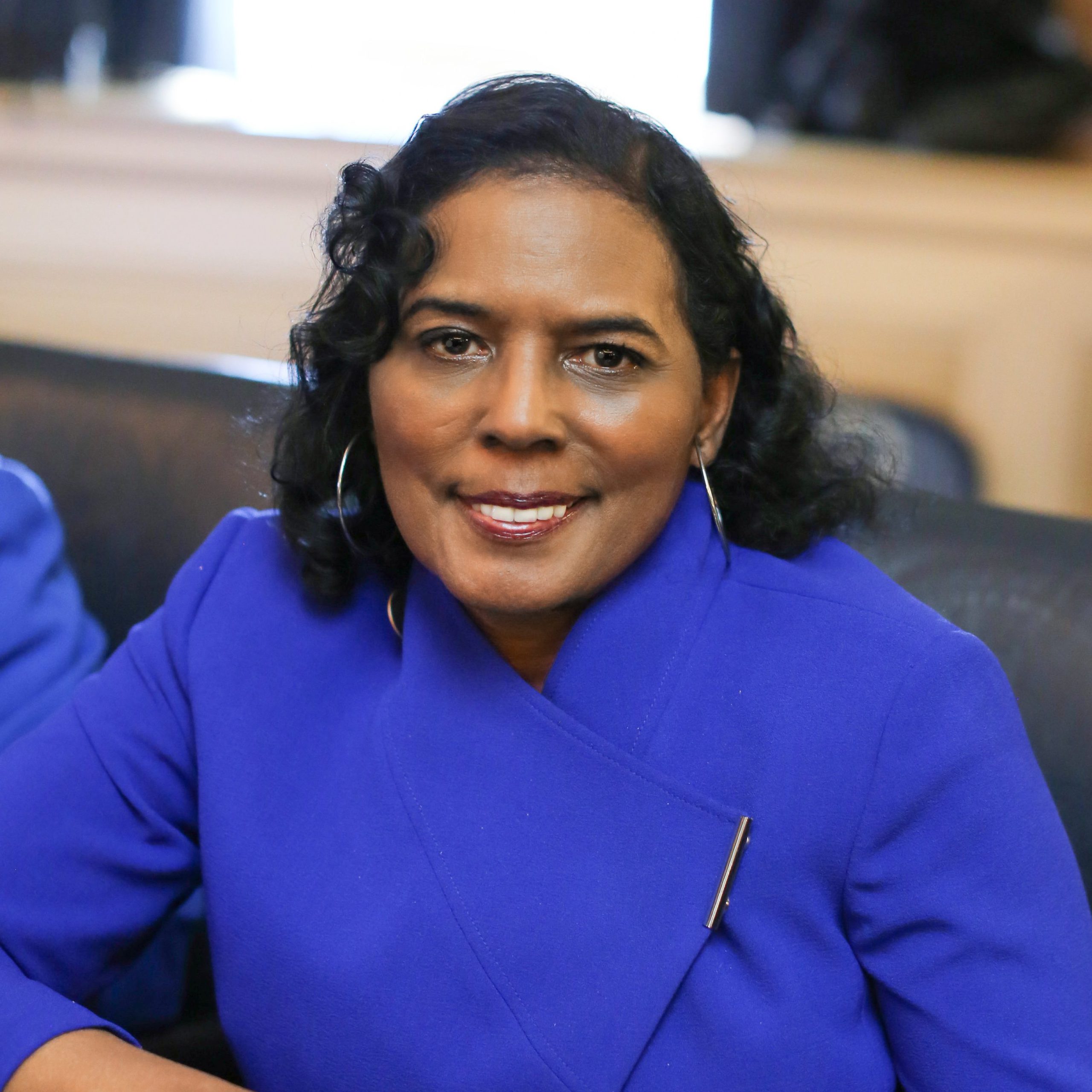
Ward
The House passed HB1 from Del. Jeion Ward, D-Hampton, in a 64-34 vote. The bill would incrementally raise Virginia’s minimum wage to $15 per hour by 2028, with automatic annual inflation adjustments beginning in 2029.
The bill has an identical Senate companion, SB1 from Sen. Louise Lucas, D-Portsmouth, which was reported favorably and will be considered in the Senate’s finance committee this week. As the bill proposes applying increased minimum wage across-the-board for Virginia workers, it is attached to a significant fiscal impact statement, which considers an increase in wages for Virginia’s state and local minimum wage workers.
The goal behind the legislation is to provide predictability and long-term stability for both employees and employers. However, it represents a significant long-term shift in employer wage obligations and it will remain a closely watched issue for Virginia employers.
Paid sick leave
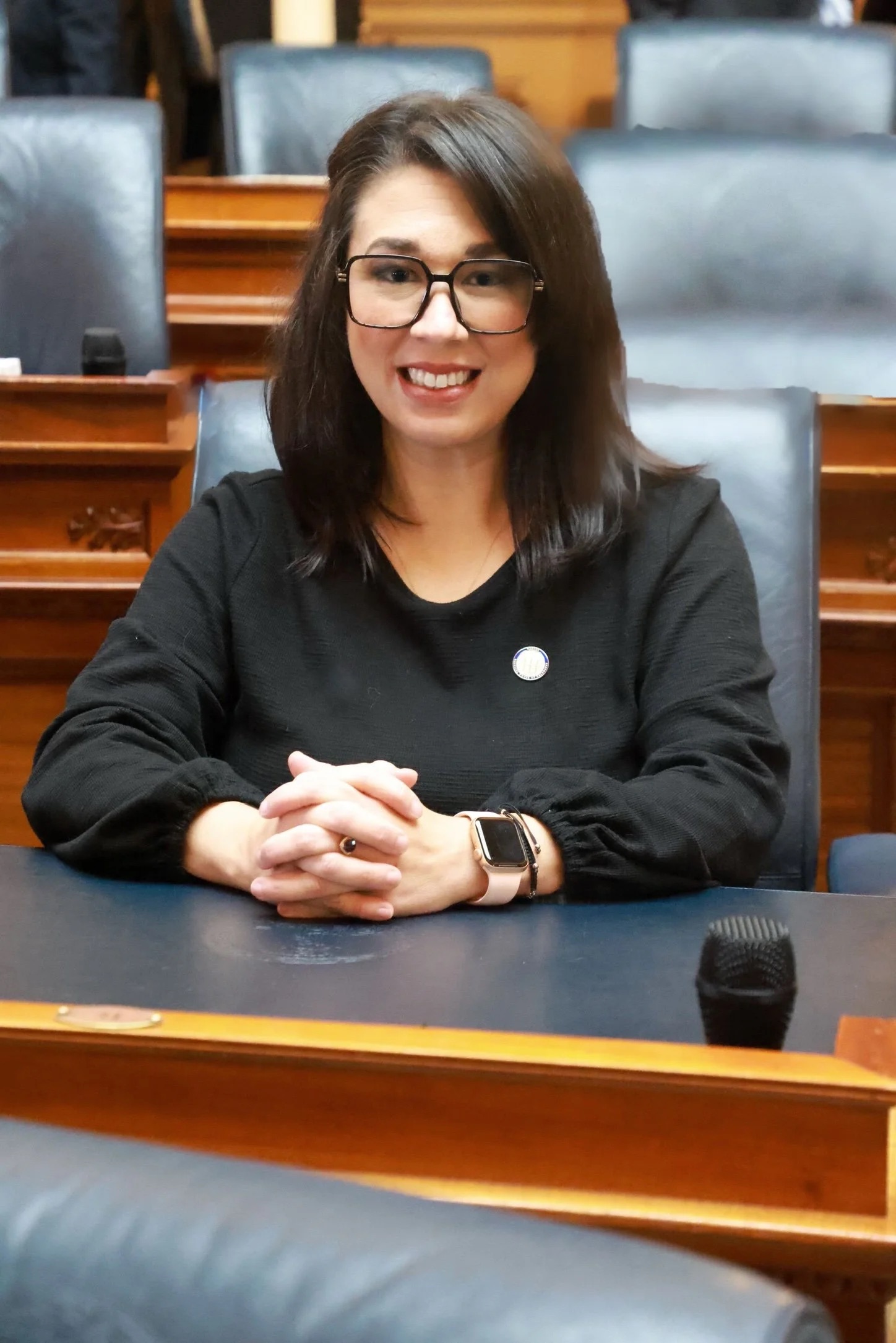
Convirs-Fowler
Legislation requiring Virginia employers statewide to provide paid sick leave for employees also continues to move forward. HB5 from Del. Kelly Convirs-Fowler, D-Virginia Beach advanced out of a subcommittee and will face further consideration in House Appropriations. A similar measure, SB199 from Sen. Barbara Favola, D-Arlington also progressed out of a Senate subcommittee last week and now heads to Senate Appropriations.
If passed, this bill would require all Virginia employers to provide one hour of paid sick leave to each employee for every 30 hours worked. Currently, the law only applies to home health workers. Under the expansion, employees would also be allowed to use their paid sick leave to care for their family members and to take their children to doctor’s appointments.
Many legislators view these policies as workplace flexibility tools aimed at reducing turnover and strengthening employee satisfaction – which have been especially important across many industries in recent years.
VADA is continuing to work alongside the business community to ensure that these proposals are implemented in ways that are workable and balanced for employers.
Employee Child Care Assistance Program

McClure
HB18 Del. Adele McClure, D-Arlington passed on the House floor with an overwhelming bipartisan 91-7 vote. This bill establishes a new state-supported program to incentivize employers to contribute to employee childcare costs. While a voluntary program for Virginia employers, the program intends to support workforce retention and improve access to childcare for Virginia’s employees.
SB3 Sen. Lashrecse Aird, D-Petersburg, the Senate companion of HB18, will face Senate Finance and Appropriations this week.
Wage Gap Efforts
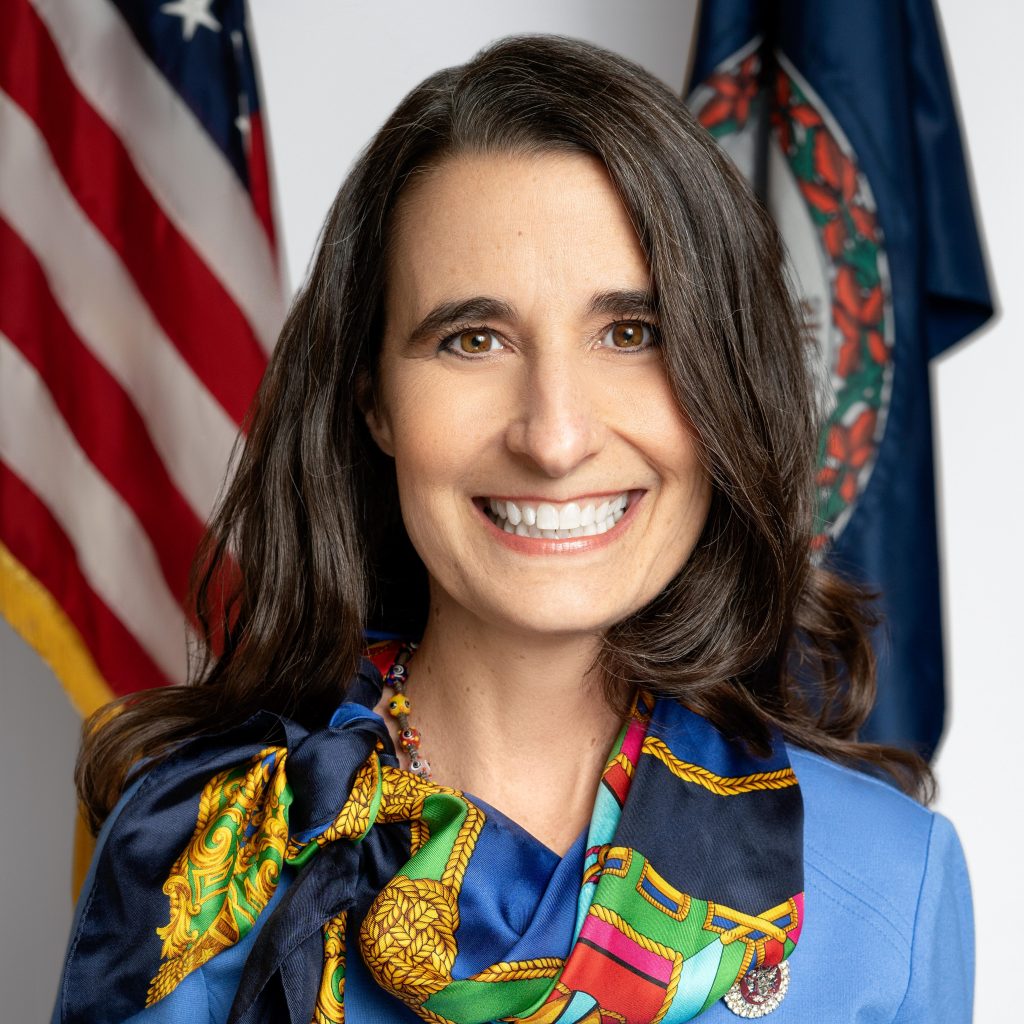
Boysko
Since 2017, Sen. Jennifer Boysko, D-Herndon has championed a bill aimed at narrowing Virginia’s wage gap. SB215 updates the Virginia Equal Pay Act with measures to prohibit employers from seeking or relying on a prospective employee’s salary history. In her testimony of the bill, Boysko relayed that Virginia’s female workers make 83% of the wages their male counterparts do in the same positions. By blinding employers as to all prospective employee’s salary histories, this bill reflects a studied measure to combat the issue.
The legislature has passed an identical bill twice. It has been vetoed by past governors twice.
SB 215 passed out of the Senate last week. Its House companion, HB636 from Del. Michelle Maldonado, D-Manassas, reported favorably out of its subcommittee and continues to move through the House.
Paid Family Medical Leave
One of the priorities of Gov. Abigail Spanberger’s administration is to establish a state-run paid family and medical leave insurance program in Virginia. SB2 from Boysko and HB1207 from Del. Briana Sewell, D-Woodbridge seek to do just that.
- The program would be funded through assessments on both employers and employees to support a fund which would provide long-term leave pay for Virginia families in the case of a qualifying medical event.
- This proposal reflects a broader national trend. In recent years, many states have adopted similar paid leave insurance programs. Virginia legislators view this effort as a competitive advantage for attracting workforce talent to Virgiia, especially among younger workers and families.
Wage Theft, Employee Misclassification, and Employer Liability
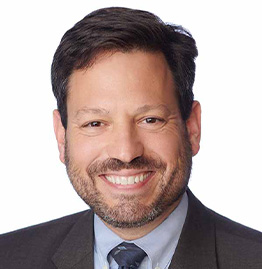
Surovell
SB644 from Sen. Scott Surovell, D-Mount Vernon, expands and clarifies employer liability for wage-related violations and reverses several recent court decisions that weakened employee wage theft, whistleblower, and retaliation claims against their employers.
- First, the bill reverses a 2022 Virginia Supreme Court case, Cornell v. Benedict. The impact would require employers to enhance oversight over contractors and subcontractors to avoid liability exposure.
- The bill also reverses a 2025 Virginia Supreme Court case, Groundworks Operations LLC v. Campbell, where a found that commissions were not considered wages under Virginia’s wage theft law. Particularly relevant for dealership employees, this bill would codify the inclusion of commissions in the law.
The bill also overturns a handful of recent employee retaliation decisions which have progressed to weaken employee rights. It also gives employees the statutory right to jury trials, enhances the rights of former employees, requires court approval of settlements, and authorizes the Attorney General to bring actions under the statute.
A similar measure, HB930 from Del. Marcus Simon, D-Falls Church, is progressing through the House. These proposals enhance the importance of workplace documentation and compliance best practices. Moreover, recent litigation is evidence that clarification in this code section may be necessary to create more predictable compliance standards and reduce legal uncertainty.
Transportation
- HB55 from Del. Rip Sullivan, D-McLean advanced favorably out of subcommittees last week. It would allow certain Virginia localities to pilot automated noise monitoring systems to enforce vehicle exhaust violations, focusing on decibel levels greater than 95.
- HB1143 from Del. Terry Austin, R-Buchanan, is aimed at eventually eliminating Virginia’s vehicle registration stickers. While the bill sought to save money for the DMV, it was passed by for the year after municipal commissioners of revenue and treasurers testified to potential increased costs due to personal property tax lapses, increased delays in vehicle registration renewals, and exacerbated issues reaching indebted taxpayers without the yearly touchpoint at the DMV. The issue will be reevaluated in coming years after more conversations with stakeholders.
- HB1145, also from Austin, initially sought to put Virginia on a two-year vehicle inspection cycle, instead of the current law requiring yearly inspections. However, after discussions with stakeholders, the bill took on a new shape. The language of the bill, as amended, will reduce barriers to entry for certified safety inspectors.
The Road Ahead
This next phase of the legislative session provides important opportunities to continue working with lawmakers to refine legislation and ensure that policies can work effectively for both employers and employees.
This week will be the last full week for legislators to work on legislation in their own chambers before the bills switch sides – this means that many of the more consequential bills that have needed additional work will meet their fate before the week is over.
The VADA government affairs team will remain actively engaged throughout the process, continuing to work closely with legislators to support policies that strengthen Virginia’s economy, modernize dealership operations, and promote a fair and predictable business environment.
Among the broader policy considerations, this week’s conversations continued to center around a few themes: consumer protections, labor policies, tort reform, tax reform, data privacy, transportation costs, and clean energy policies.
The Virginia Automobile Dealers Association’s government affairs team continues to track developments closely. This week’s update focuses on dealer-specific legislation, broader DMV and vehicle-related policy, and the continued discussion around transportation-related tax reform.
Reminder: Dealer Day moved to Wednesday, February 25
Due to weather, Dealer Day on the Hill (previously scheduled for January 28) has been moved to Wednesday, February 25.
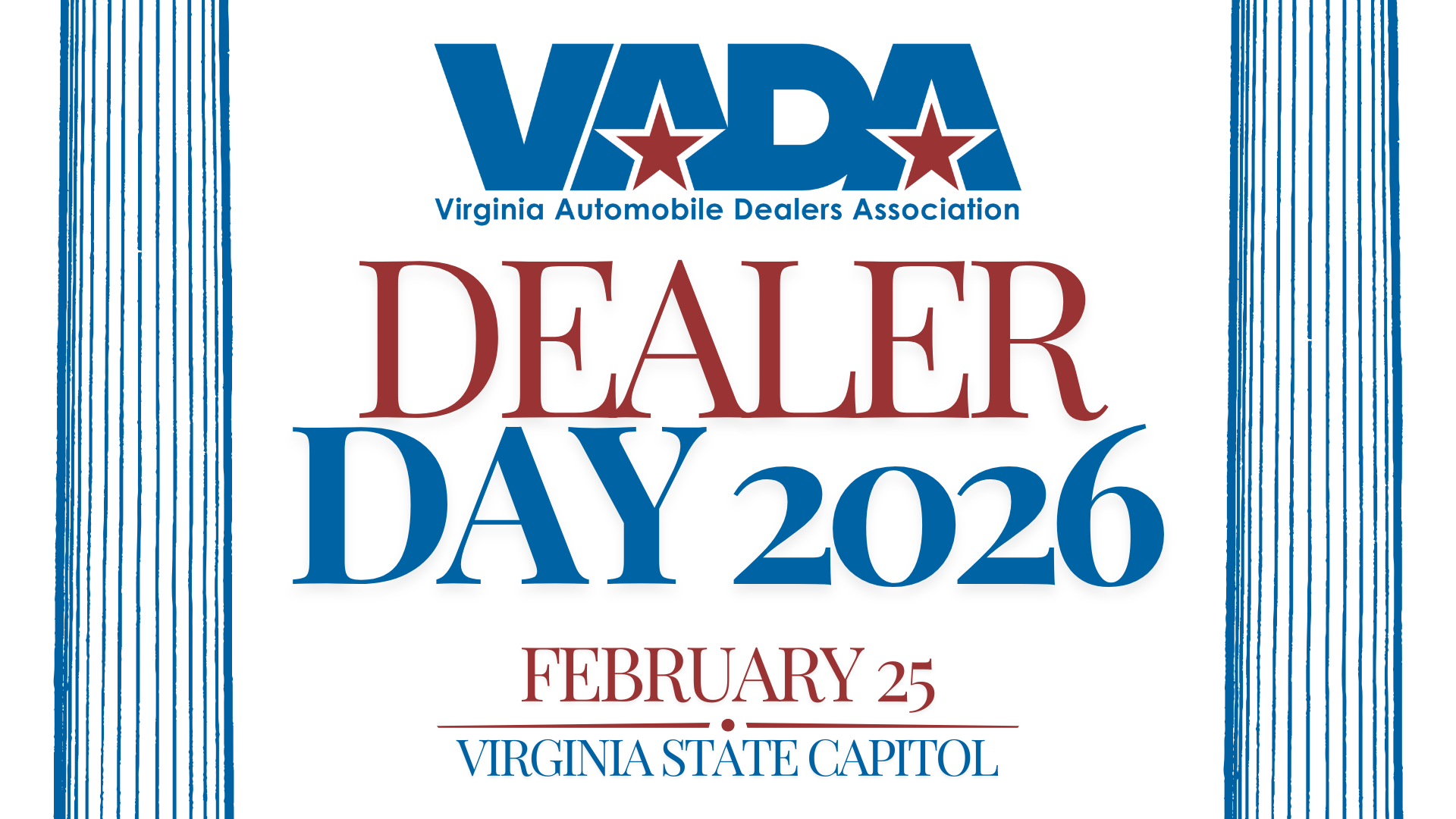
Leaders from every store in Virginia are encouraged to attend our annual Dealer Day at the Capitol, where we will meet face-to-face with lawmakers to explain to them the importance of the franchise system.
VADA Dealer Day at the Capitol 2026
Wednesday, February 25, 2026
(Then walking to meetings at the Virginia State Capitol)
Start: 501 E. Broad Street
Richmond, VA 23219
11:30 a.m. - 4 p.m.