July 1, 2026
A Kansas City auto group leader says the biggest cost facing dealerships isn't on the balance sheet — it's hidden in the way work gets done.
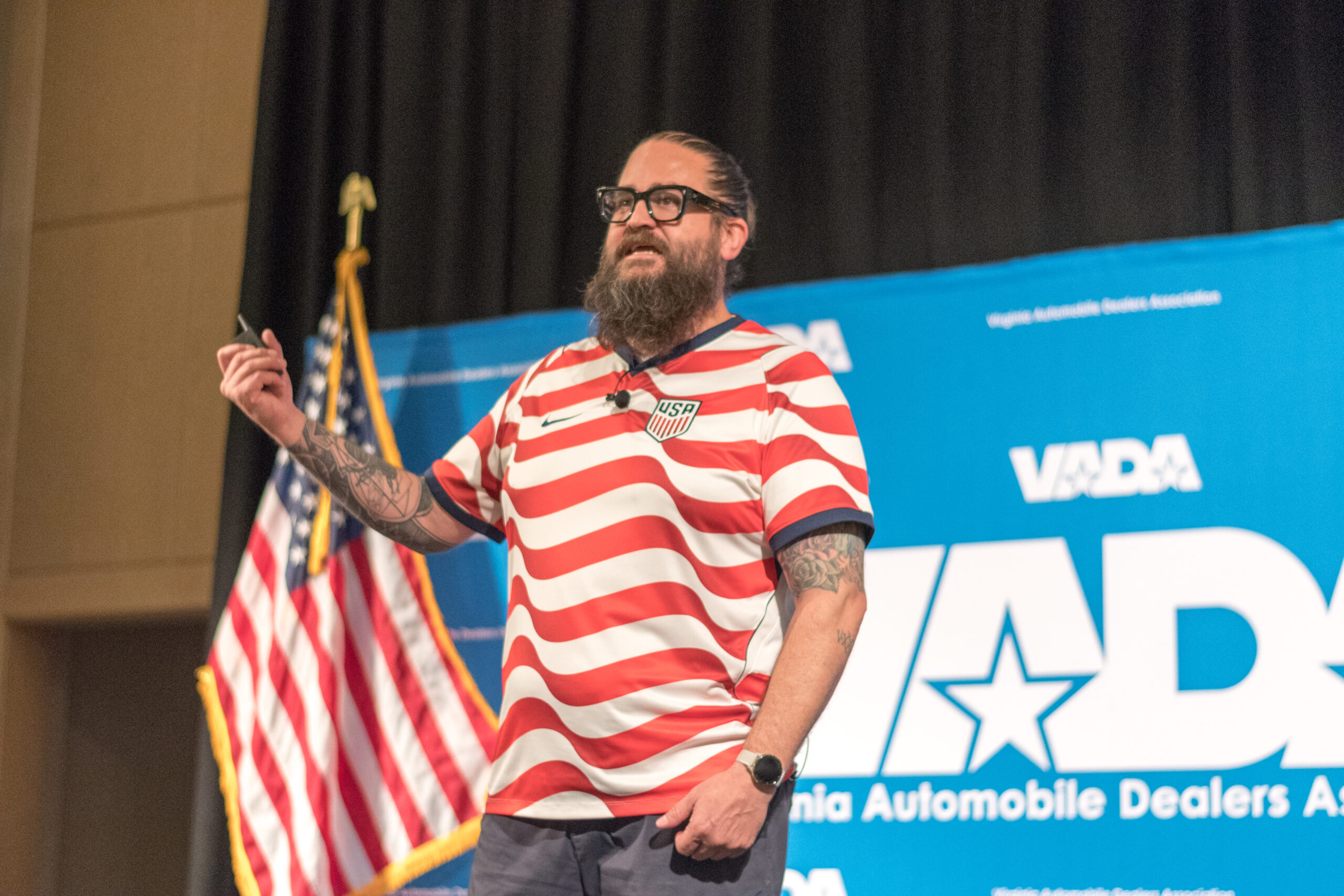 Most dealers can tell you exactly what they spent on advertising, floorplan interest, or warranty claims. But if you listen to Oakes Auto Group corporate finance director Joe St. John, one of the industry's largest expenses rarely appears on any report.
He calls it "The Indifference Tax."
Speaking at the 2026 VADA Convention, St. John argued that dealerships quietly lose millions of dollars through turnover, inconsistent processes, and managers who spend their days putting out fires instead of developing people. The Kansas City leader delivered a message about the importance of building systems that make success repeatable.
Here are five of the biggest lessons from his presentation.
1. Turnover isn't an HR problem. It's a profit problem.
St. John challenged dealers to calculate what employee turnover actually costs their business.
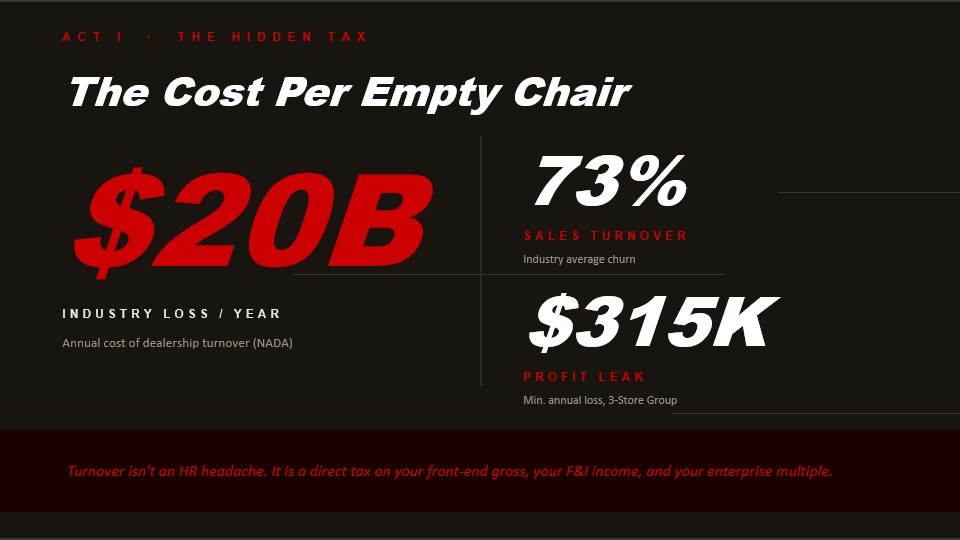
Using conservative estimates of $12,000 per departing salesperson and the industry's average 73% turnover rate, he estimated that a three-store dealership group could easily lose more than $315,000 annually replacing sales staff.
Scale that across the industry, he argued, and the hidden cost approaches $20 billion every year.
"This isn't an HR headache," St. John said. "It's a direct tax on your front-end gross, your F&I profit, and your enterprise multiple."
2. Busy managers aren't necessarily leading.
St. John walked through what he called a typical Tuesday morning for a sales manager. By 10 a.m., the manager had rebuilt deal structures, tracked down titles, resolved pricing issues, fielded lender questions, and handled constant interruptions.
What hadn't happened?
Coaching. Accountability conversations. Team development.
"Our sales managers have stopped leading, and they've all started doing," he said.
The result is a dealership full of activity without enough leadership to help people improve.
3. Tasks are the silent killer.
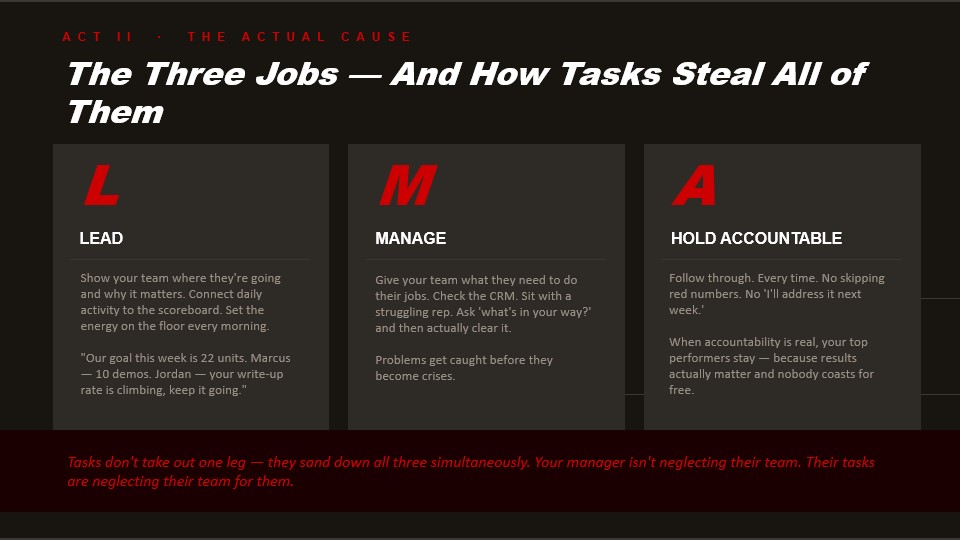
Administrative work steals the three responsibilities every manager should own:
- Lead
- Manage
- Hold people accountable
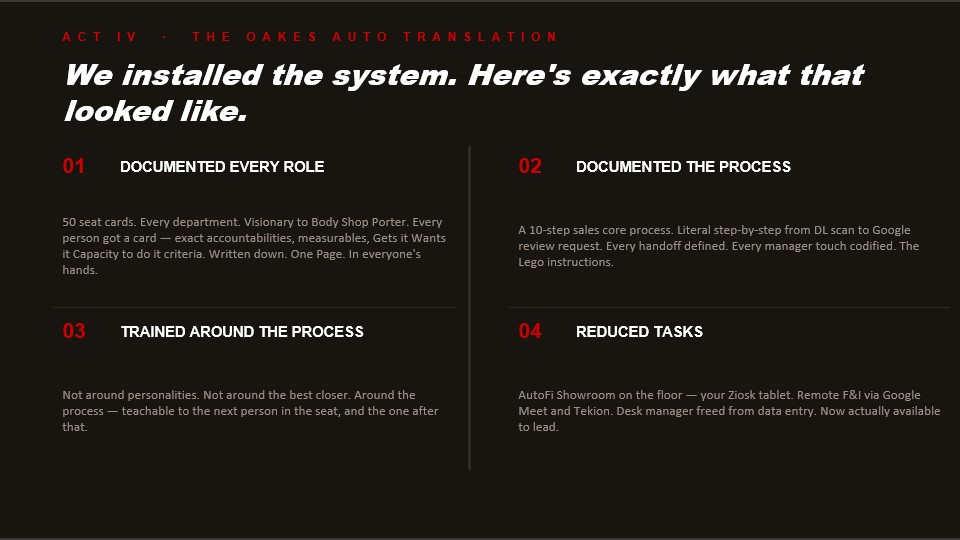
Every hour spent chasing paperwork or fixing preventable mistakes is an hour not spent developing employees, he said. Rather than blaming managers, St. John argued that dealerships should examine the systems forcing managers into reactive work.
"Their tasks are neglecting their team for them," he said.
4. Great systems outperform great people.
To prove his point, St. John shared a simple experiment conducted with his own leadership team. Three groups were asked to build the same Lego taxi.
- One relied on a manager giving verbal instructions.
- Another depended on the manager to release directions one page at a time.
- The third group received the complete instructions upfront and organized themselves.
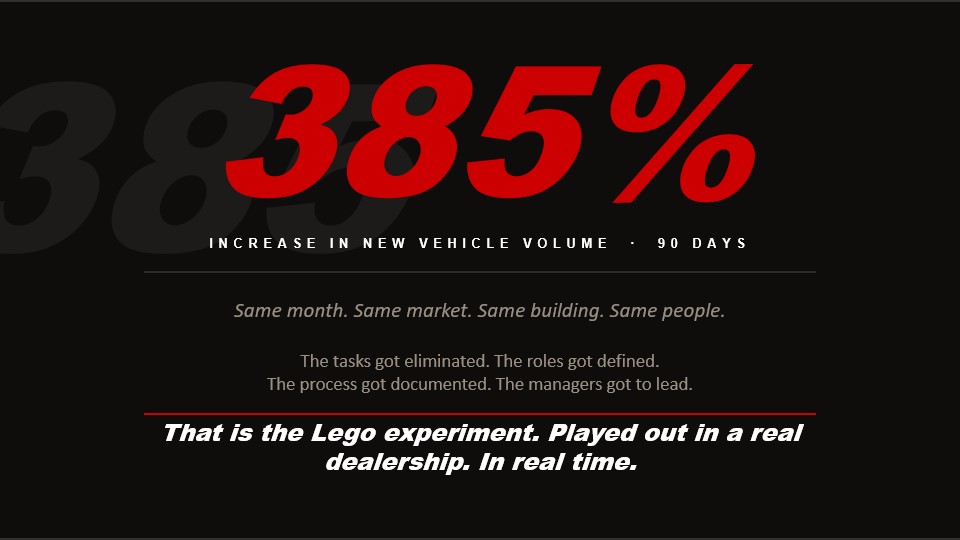
The third team finished first — by a wide margin. The exercise offered a lesson that wasn't about Lego bricks: "When your frontline has both the vision and the blueprint, the system executes itself," St. John said.
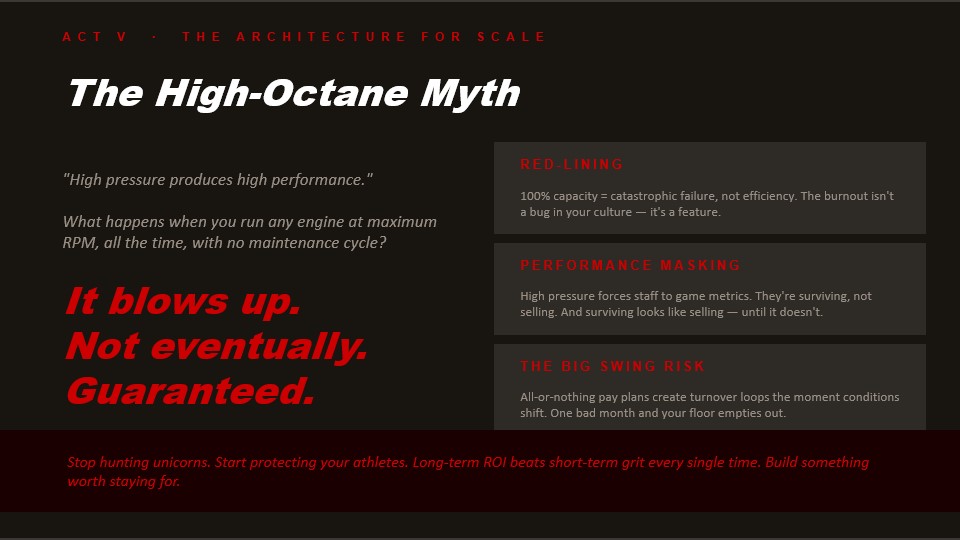
He contrasted that with dealerships built around "heroes" who solve every problem personally.
"Heroic effort isn't a culture," he said. "It's a liability."
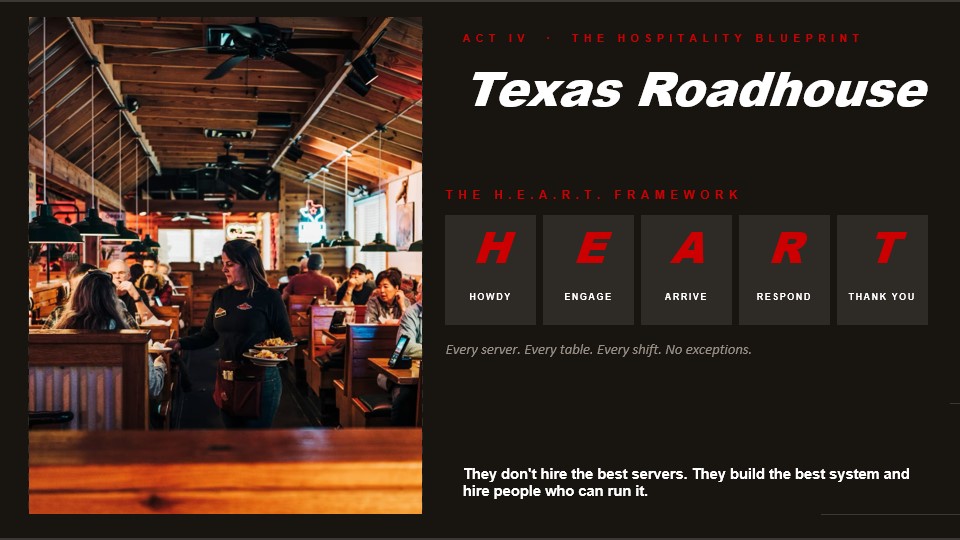
5. Dealers should think more like Texas Roadhouse. Yes, the chain steak restaurant.
Texas Roadhouse is St. John's favorite restaurant, and he explained why. The company succeeds, he argued, not because it hires extraordinary servers, but because it has created an extraordinary system.
From its H.E.A.R.T. hospitality framework to technology that removes routine tasks from servers, everything is designed to free employees to focus on the customer experience.
"They don't hire the best servers," St. John said. "They build the best system and hire people who can run it."
He challenged dealers to ask the same question inside their own stores: What tasks could be eliminated so employees can spend more time serving customers instead of managing paperwork?
The big takeaway
For dealerships facing margin pressure, staffing challenges, and increasing operational complexity, St. John's argument was clear: the biggest opportunity isn't finding harder-working employees, but eliminating the hidden "indifference tax" that keeps good people from doing their best work. Challenging a long-held assumption, he said success does not actually depend on finding exceptional people willing to outwork everyone else, but sustainable performance comes from building repeatable systems that ordinary people can execute consistently.
"The answer isn't better heroes," he said. "The answer is better instructions."