ACV's John Coles, Ph.D. brings a doctorate to the room
June 24, 2026
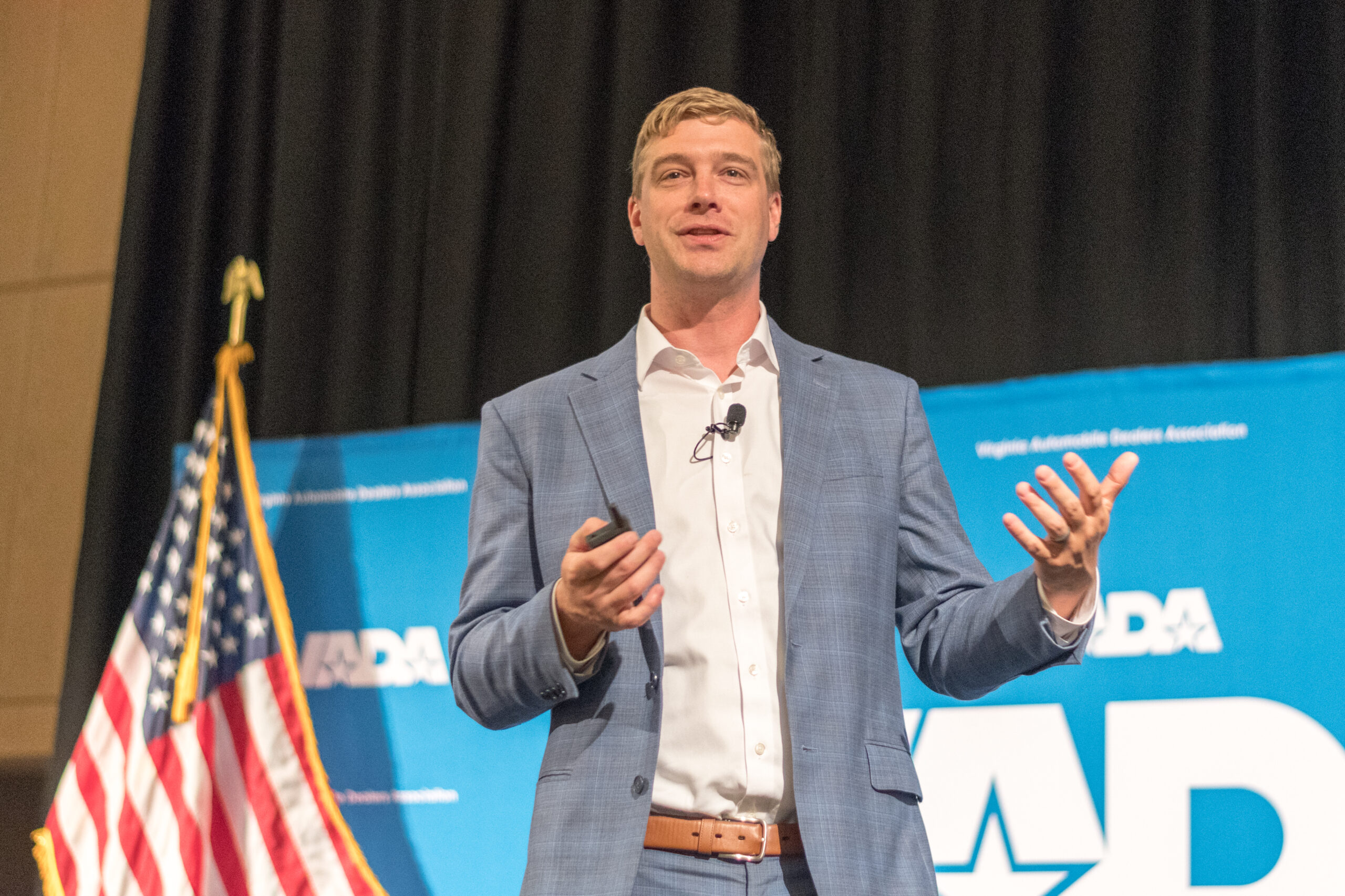
ACV's John Coles told dealers to quit waiting for things to go back to the way they were.
Stop waiting for things to go back to the way they were.
That was the message delivered by John Coles during his presentation at VADA '26. The vice president of data science and analytics spent much of his session examining economic indicators, used-vehicle trends, and artificial intelligence, but his message was ultimately about adaptation. Dealers who continue measuring today's market against the extraordinary conditions of 2021 and 2022 are preparing for a future that no longer exists, he said.
"Running a business with uncertainty is the new normal," Coles said.
That divergence is creating different experiences for different consumers. Some continue purchasing newer vehicles, while others are increasingly focused on affordability.
The economy remains challenging, but consumers are adapting
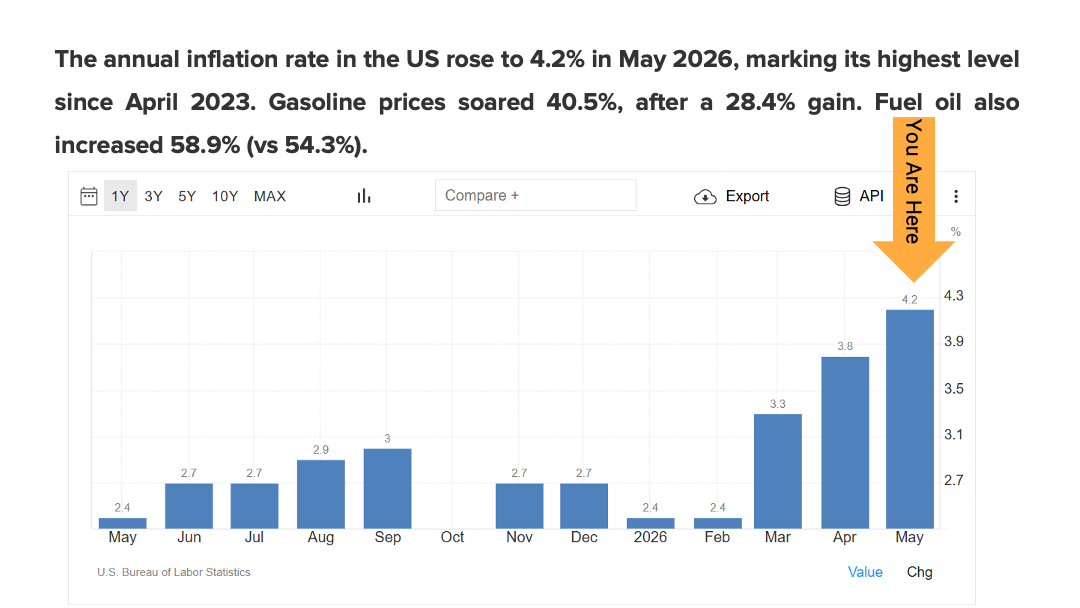
Coles began with a look at the broader economy, noting elevated consumer debt levels, persistent inflation and continued uncertainty around employment and interest rates.
While inflation reached 4.2% in May and fuel prices remained a significant contributor, Coles encouraged dealers to focus less on short-term volatility and more on long-term trends.
"The reality is the K-shaped economy that has been talked about for the last five years is very much coming into play in the service drive and in the sales department in each of your dealerships," he said.
That divergence creates different experiences for different consumers. Some continue purchasing newer vehicles, while others are increasingly focused on affordability.
Margin compression is no longer temporary
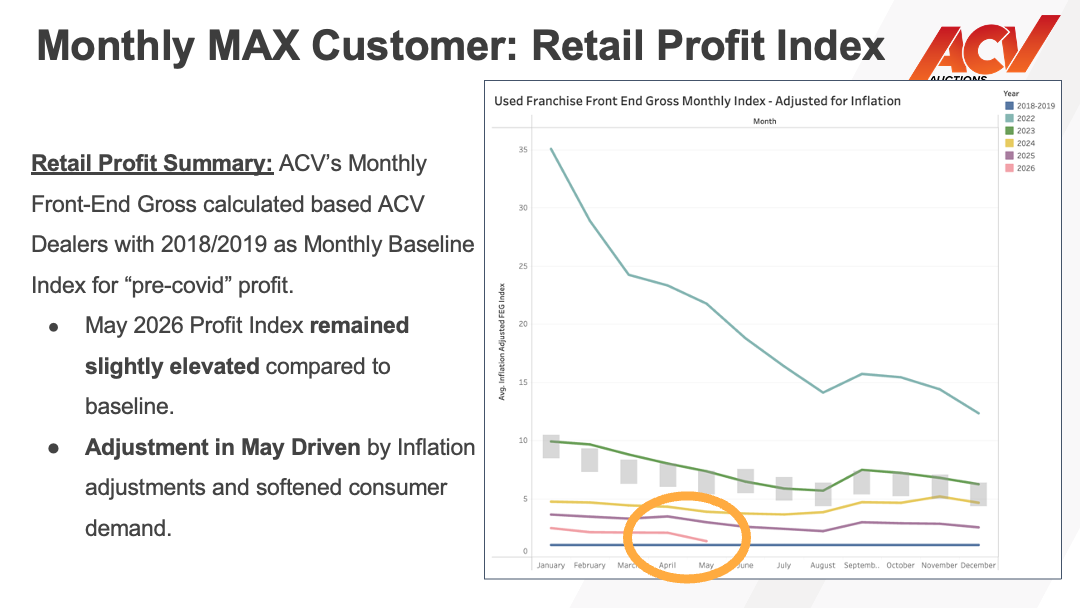
The most important chart in Coles' presentation may have been ACV's Retail Profit Index, which tracks dealership profitability against inflation-adjusted pre-pandemic levels.
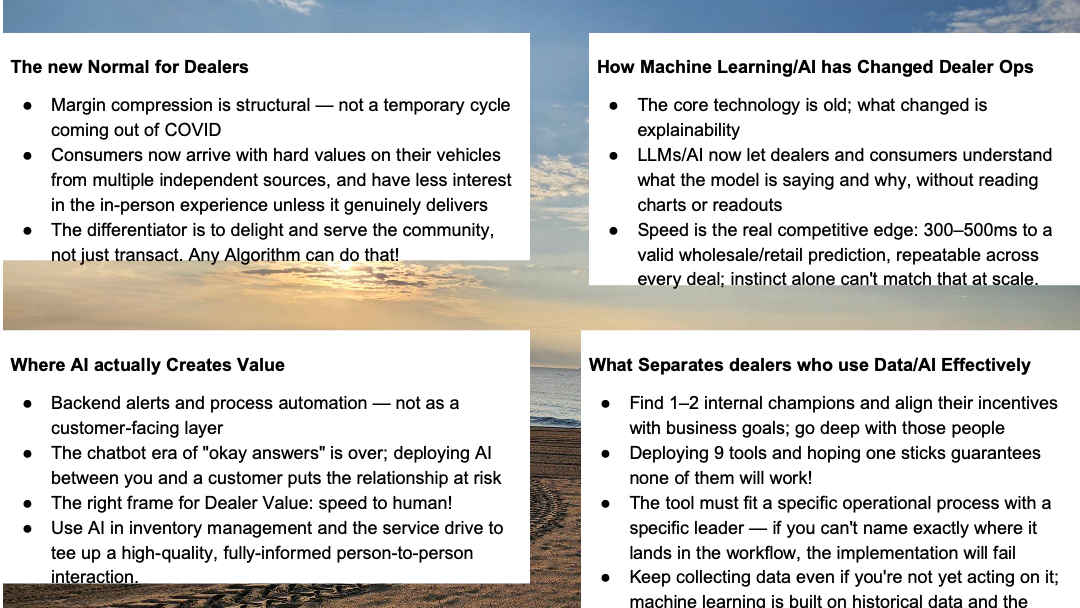
The chart tells a simple story: the exceptional profits generated during the inventory shortages of the COVID era are fading, and dealership profitability is moving back toward historical norms. "The new normal for dealers, margin compression is structural. It's not temporary," Coles said.
Many managers entered the industry during a period when inventory was scarce and front-end grosses reached unprecedented levels. As those conditions disappear, dealerships are facing what Coles described as a "massive retraining and mindset course correction."
"That's a very real friction that we're seeing right now in stores," he said.
Affordability is reshaping the used-car market
One of the clearest examples of changing consumer behavior is found in used-vehicle demand.
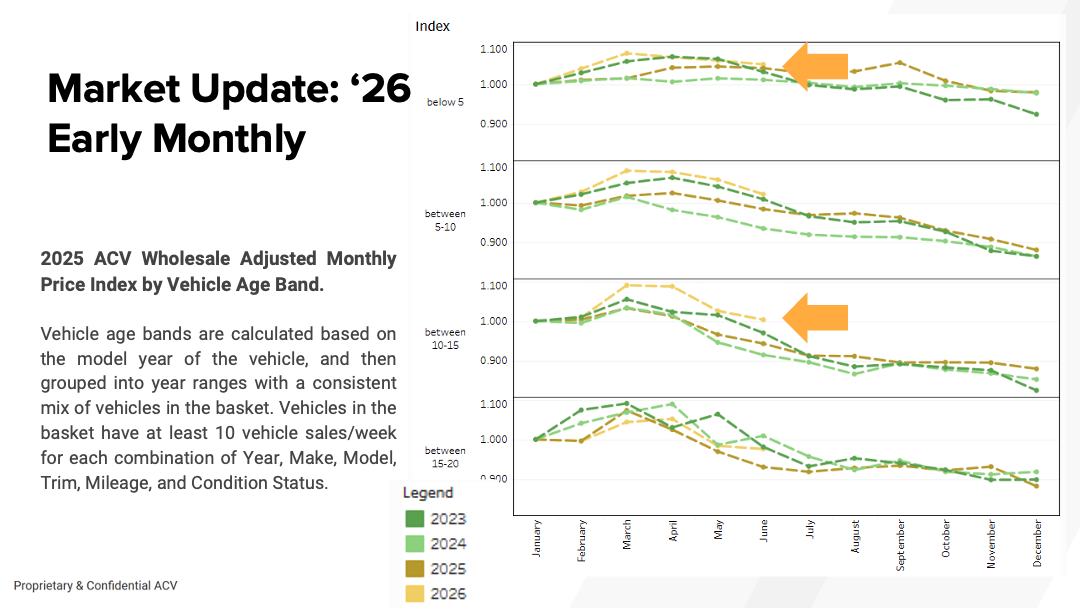
Rather than seeing strength concentrated in nearly-new inventory, ACV's data shows growing demand for vehicles between 10 and 15 years old.
"We're seeing accelerated demand slightly hotter than seasonal for vehicles between 10 and 15 years old," Coles said. That reflects the reality of today's consumer, as higher interest rates and elevated debt levels push buyers toward vehicles that offer reliable transportation at a lower monthly payment. "The average car on the American road right now is 13 years old," he said.
At the same time, franchise dealers are seeing continued demand for three- to five-year-old vehicles as customers search for alternatives to new inventory.
Customers arrive informed
The internet transformed vehicle shopping years ago — and now artificial intelligence is accelerating the trend.
Today's customers often arrive with vehicle valuations from CarMax, Carvana, or online pricing tools already in hand.
"They're going to walk in with a number and maybe unwarranted confidence on the value of that car," Coles joked.
That means pricing information alone is no longer enough to differentiate a dealership. Instead, Coles argued that community involvement, trust and personal relationships will become even more important as consumers gain access to more information.
"Every consumer walking in will be on their phone, have three different prices, and you have one shot at reminding them how you're connected to the community before they leave," he said.
AI works best behind the scenes
Although artificial intelligence dominated much of the conversation throughout the convention, Coles offered a more measured perspective on where it can create value.
He believes dealerships should resist the temptation to place AI directly between employees and customers.
"There's a trend in the industry to push more and more to have AI as a customer-facing layer. I feel very strongly that's a terrible idea," he said.
Instead, he sees the greatest opportunity in back-office functions such as inventory management, staffing, lead routing and process automation.
"The chat bot era of okay answers is over," Coles said. "Speed to a human is key."
For dealers eager to adopt AI, his advice was simple: start small, identify internal champions and focus on solving specific operational problems rather than chasing every new tool that enters the market.
"If you deploy nine pilots, you will get zero successes," he said.
The doc's final guidance
For all the discussion of inflation, vehicle values, and AI, Coles returned to a simple conclusion: Dealers cannot wait for the conditions of the pandemic-era market to return.
Success over the next several years will come from adapting to thinner margins, understanding affordability-driven consumers, and using technology to strengthen — rather than replace — the human relationships that have always defined retail automotive.
"The differentiator is to delight and serve the community," he said, "not just transact."