March 3, 2026
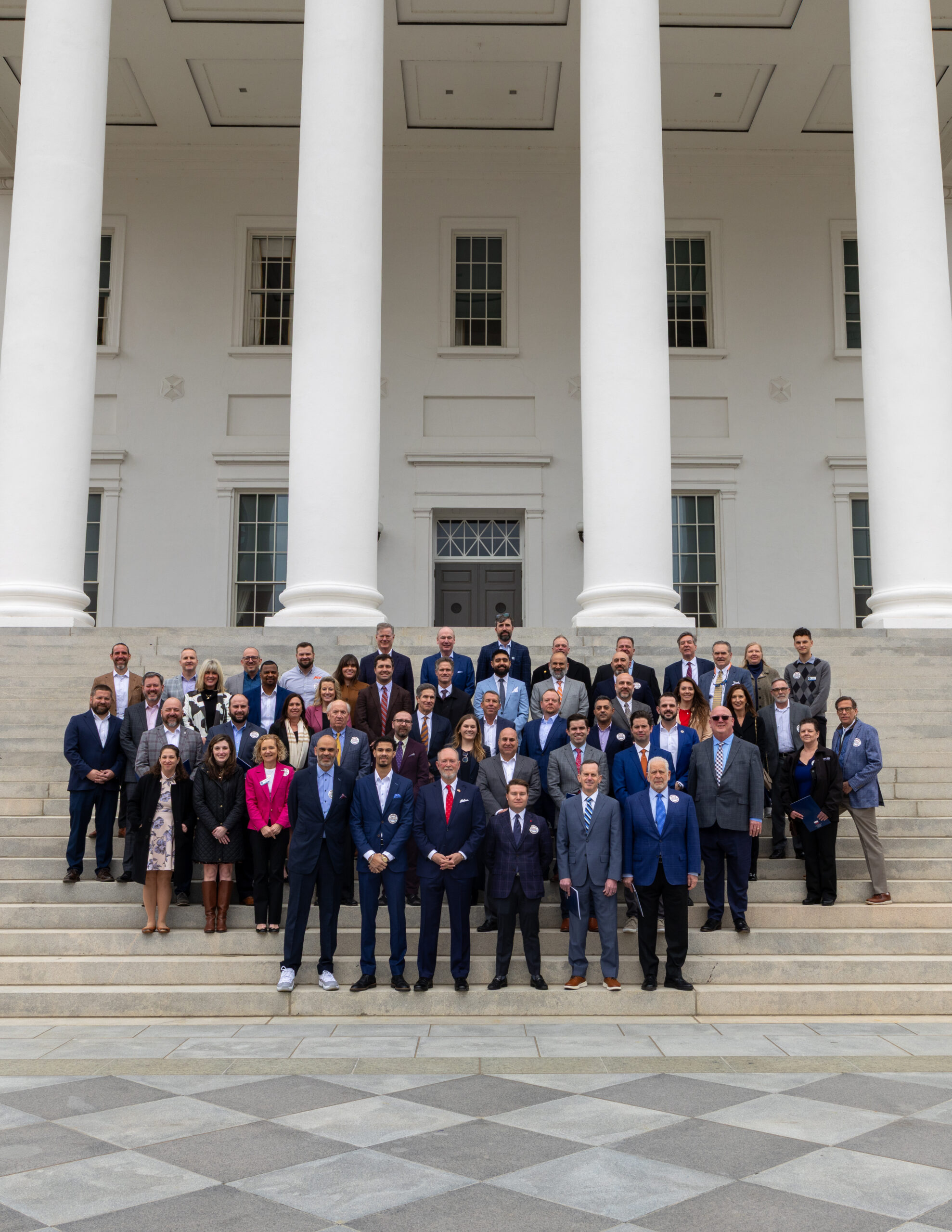
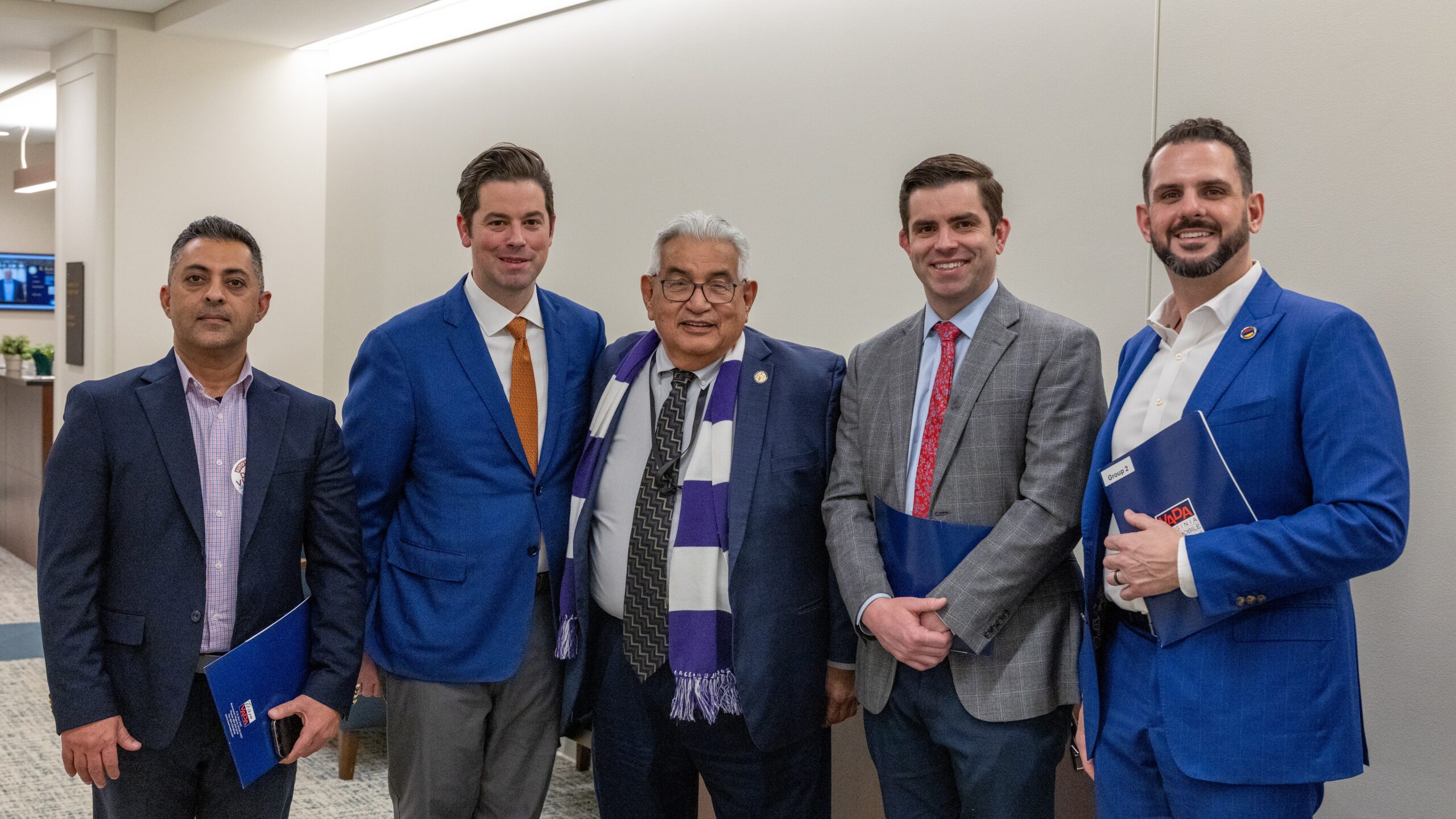
Virginia's dealership leaders and employees at VADA's 2026 Dealer Day at the Capitol on Feb. 25.
A successful Dealer Day as final negotiations drive toward the finish line
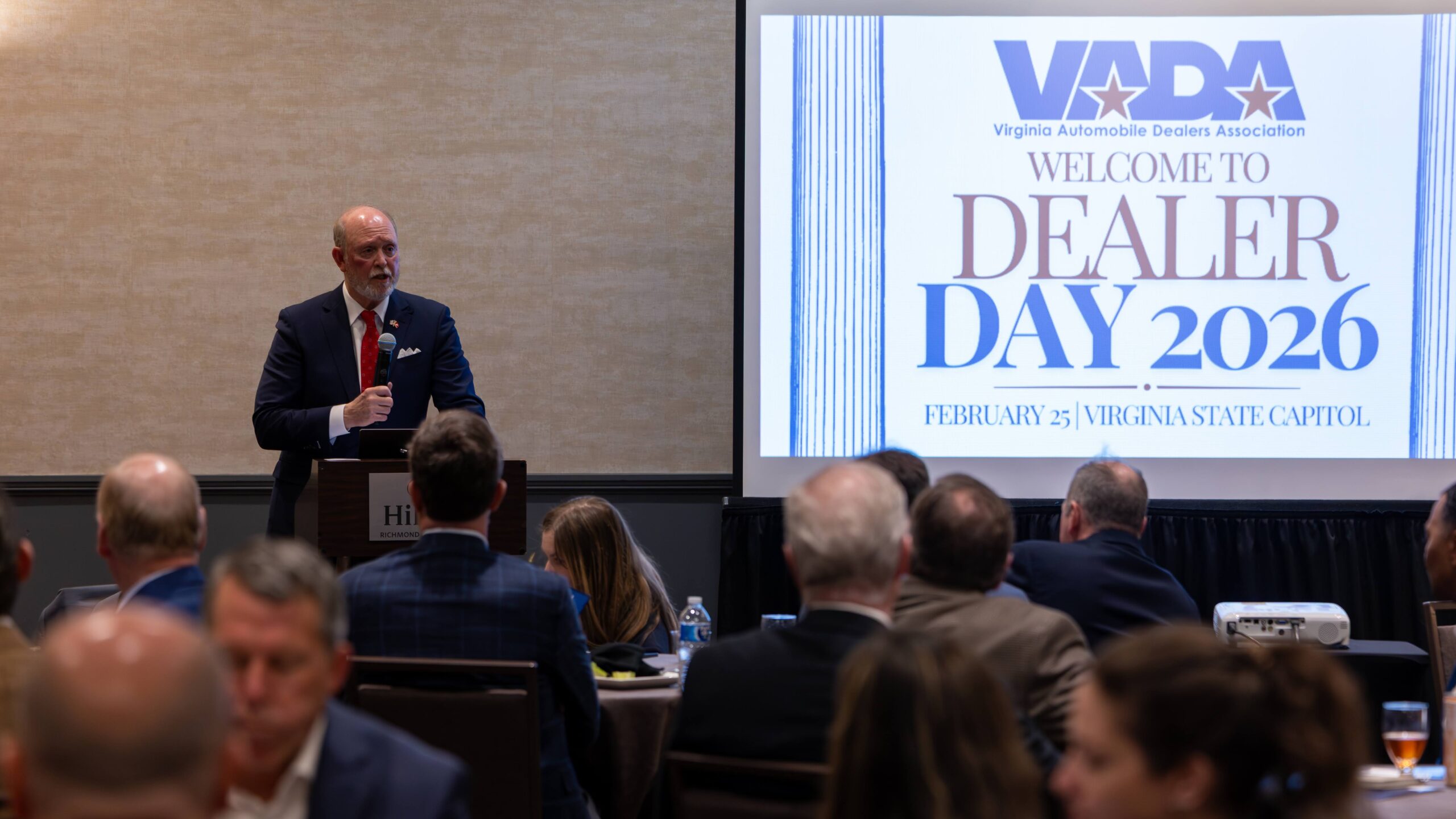
Before we get into the latest General Assembly Update with just two more weeks to go, we want to send a big thanks to all the dealers who took time to come to Richmond for Dealer Day at the Capitol last week.
This participation truly makes an enormous difference. Legislators consistently tell us how valuable it is to hear directly from VADA’s members about the importance of the motor vehicle franchise system, the role dealerships play in the Virginia economy and their communities, and the real-world impact of legislation on Virginia businesses and consumers. Dealer Day is a longstanding tradition that continues to strengthen relationships between dealers and policymakers. Your time and engagement help ensure that your perspective is heard as decisions are being made in Richmond.
Legislative Update: Down to brass tacks
The final weeks of Virginia’s 2026 legislative session are moving quickly as the General Assembly shifts from policy debates toward final negotiations – with particular focus on the state budget. Negotiations highlight the differences between the House and Senate versions of legislation, while prevailing versions of bills are being prepared for the Governor’s final consideration.
This past week brought continued movement on major employment legislation, and important developments in Virginia’s budget process, as well as some progress on dealer-related bills.
2026 is a budget year. Here's what that means.
 Virginia operates on a biennial budget system, meaning the Governor introduces a proposed budget in even-numbered years for the upcoming two fiscal years, along with any changes to the current fiscal year budget. In odd-numbered years, the General Assembly considers amendments to the existing biennial budget to reflect revenue projections and spending priorities.
During even-numbered long session budget years (as is the case for 2026), the Governor’s proposed budget is introduced as a bill and referred to the House and Senate Appropriations committees. They examine the budget, analyze funding items, and recommend funding policies.
Last week, Virginia’s House and Senate Appropriation committees released their respective amendments to the introduced budget for fiscal years 2027 and 2028. The amendments make substantial changes to the budget introduced by former Gov. Glenn Youngkin. Each chamber’s budget substantially differs from the other. The bills will go to a conference committee to reconcile the differences of the proposed budgets.
Here are some notable points about the latest budget developments:
Labor & Employment
- Both House and Senate budgets increase funding for the Virginia Department of Labor and Industry. House amendments include an additional $10 million over the biennium to hire up to 25 additional personnel.
- Similarly, the Senate amendments propose an additional $7 million over the biennium to fund an additional 10 personnel. Both chambers’ budget amendments direct the funding to enforce new labor laws moving forward in the 2026 session, including paid sick leave, worker misclassification and heat illness protections, among others.
- Both chambers’ budget also propose amendments which would authorize the Virginia Employment Commission to request and receive a treasury loan to fund the start-up costs associated with the implementation of a Paid Family Medical and Leave program in Virginia, which has already been identified as one of Governor Spanberger’s legislative priorities.
- The House budget also provides the Office of the Attorney General with $2 million over the biennium to fund 8 new positions in the Department and establish a dedicated Workers Protection Unit.
Taxation & Transportation
The most significant tax policy change reflected in the budgets is one unique to the Senate’s budget proposal. As discussed in our pre-legislative reports and throughout this General Assembly session, Virginia has been looking for a dedicated and sustainable source of funding for the Washington Metropolitan Transit Authority (WMATA).
- The Senate’s budget proposes eliminating an existing sales and use tax exemption for data centers and directing the new revenue source to WMATA’s Capital Fund.
- The House’s budget differs and instead proposes to fund WMATA through the state’s General Fund in 2027 and going back to the drawing board next year for its 2028 funding source.
Interestingly, the Senate budget proposes funding a study to look at issues related to ticket reciprocity and registering vehicles in Virginia for out-of-state residents.
Childcare
Both the House and Senate budgets include funding for the Employee Child Care Assistance Pilot Program, which would be initiated through a bill moving forward in the legislative session with bipartisan support.
Education and Workforce Development
House and Senate budget amendments provide increased funding for education and workforce development. The House budget amendments include an additional $30 million for the Virginia Community College System to expand career, technical education, and workforce development programs. The Senate budget amendments provide an additional $11 million to support Virginia’s FastForward program.
Now, a look at the dealer bills
If you've been following along this session, you will find nothing too new here — all the bills we've covered continue to move forward.
HB570 (Del. Michael Feggans) – Dealer Records
- Status: Passed the House and Senate, on track for the Governor’s signature
- The bill modernizes dealer record-keeping by allowing electronic preservation without prior DMV approval, cleaning up obsolete requirements
HB586 (Del. Scott Wyatt) – Dealer Business-Hours Filing
- Status: Passed the House and Senate, on track for the Governor’s signature
- This bill shifts filing of dealer business-hour changes from the DMV to the Motor Vehicle Dealer Board – a logical regulatory adjustment reflecting modern practices.
HB608 (Del. Scott Wyatt) – Dealer Plate Use Expansion
- Status: Passed the House and Senate, on track for the Governor’s signature
- This bill authorizes the limited use of dealer plates for parts/fuel delivery and vehicle transport to retail supply facilities. Strong bipartisan support signals the legislator’s comfort with the bill’s narrow scope and practical utility.
HB1389 (Del. Scott Wyatt) – Motor Vehicle Transaction Recovery Fund
- Status: Passed the House (97-0), passed Senate Transportation (15-0), referred to Senate Finance and Appropriations
- This bill would allow recovery from the Fund for losses or damages to a consumer resulting from the breach of an extended service contract by a licensed dealer participating in the Fund. This bill received an unfavorable fiscal impact statement, which said that the bill could increase the claims filed against the Fund and ultimately cause it to become insolvent. VADA suggested an amendment which tightened the language to protect against broad and attenuated claims against the Fund, which helped assuage the concerns of legislators. As it stands, it is too soon to know how this bill could impact the Fund, but we will continue to watch this situation should it pass.
SB440 & SB441 (Sen. Lamont Bagby) – License Plate Use Extensions
- Status: Passed Senate (40-0), referred to House Transportation's Department of Motor Vehicles subcommittee
- Both bills are aimed at increasing the flexibility of dealers when a customer has a vehicle in their shop for a lengthy repair. Should these bills pass, customers would be able to use their own license plate on a loaner vehicle for 30 days, instead of 5 days - which is the rule under current law - with a permit that would also be valid for 30 days.
HB1145 (Del. Terry Austin) – Safety Inspections
- Status: Passed the House and Senate, on track for the Governor’s signature
- While this bill initially sought to increase the period between motor vehicle safety inspections from 12 months to 24 months, the amended version removes regulatory barriers in hopes of increasing the amount of certified inspection stations in Virginia.
HB312 (Del. Kacey Carnegie) & SB767 (Sen. Luther Cifers) – Glass Repair & Replacement
- Status: Passed the House and Senate, on track for the Governor’s signature; SB767 reported favorably from House Labor and Commerce (21-0), now on the House floor calendar
- These bills make it a violation of the Virginia Consumer Protection Act for a motor vehicle glass repair facility to fail to notify customers about advanced driver assistance systems in their vehicle, and of the repair shop’s ability to recalibrate such systems following a repair. The Senate version of the bill received an amendment in Senate Finance and Appropriations. It allows for emissions inspection waivers in the event that a vehicle failed an initial inspection and its onboard diagnostic system is in a not-ready condition to be tested when presented for re-inspection when the owner has written proof of emissions maintenance on the vehicle since the initial inspection.
HB55 (Del. Rip Sullivan) – Noise Abatement Monitoring Systems
- Status: Passed the House (64-34), and narrowly reported favorably from Senate Transportation (7-Y 6-N 2-A)
- This bill will allow certain Virginia localities to pilot automated noise monitoring systems to enforce vehicle exhaust violations, focusing on vehicle decibel levels greater than 96.
HB1008 (Del. Kathy Tran) – EV Tax Credit Reciprocity
- Status: Passed House (97-0), referred to Senate Finance and Appropriations
- This bill will allow a tax credit for EV purchasers who move to Virginia within 12 months of purchasing an EV in the state they previously resided.
HJ34 (Del. Lily Franklin) – A Study abolishing Virginia's personal property tax on vehicles
- Status: Passed House (68-25), and in Senate Finance & Appropriations
- This bill directs the tax department to study options to eliminate the personal property tax on vehicles in Virginia and to determine alternative sources of local revenue – a measure supported by Virginia’s localities.
HB1309 (Del. Jason Ballard) – GAP Insurance & Waivers
- Status: Passed House (97-0), referred to Senate Commerce and Labor
- While guaranteed asset protection (GAP) insurance has been allowed by Virginia’s State Corporation Commission, this bill will make it clear that Virginia law allows for GAP insurance products and GAP waivers to be sold.
HB808 (Del. Dan Helmer) – Modification of Loss Estimates
- Status: Passed House (97-0), referred to Senate Commerce and Labor
- This bill prohibits public insurance adjusters from modifying estimates of loss unless the revised estimate includes detailed explanations as to why any modification occurred. This will impact dealings between auto body shops, their customers, and insurance providers.
HB1124 (Del. Nadarius Clark) – Autonomous Vehicle Work Group, Workforce
- Status: Passed the House (97-0) Reported favorably from Senate Transportation (11-0), referred to Senate Finance and Appropriations
- This bill directs an existing autonomous vehicle work group to conduct an assessment on the workforce impacts created by autonomous vehicles.
SB135 (Sen. Bill DeSteph) – DMV Title Database
- Status: Failed to report favorably from House Transportation's Department of Motor Vehicles subcommittee
- This bill would allow the DMV to join a national vehicle title database to share motor vehicle owner and lienholder information as an effort to crack down on title washing and title fraud.
SB595 (Sen. Bill DeSteph) – DMV Mechanics & Storage Lien Data
- Status: Passed the Senate (29-11). Reported favorably from House Transportation (18-3)
- This bill would allow the DMV to share mechanics or storage lien information against vehicles titled in other jurisdictions with holders of the vehicle.
Major Employment Legislation Still Advancing
Employment legislation remains one of the most active and consequential areas of focus this session. Here are two of the big ones:
HB1 (Del. Jeion Ward, D-Hampton) & SB1 (Sen. Louise Lucas, D-Portsmouth) — Increasing the Minimum Wage
- Status: HB1 reported favorably from Senate Commerce and Labor (8-5), referred to Senate Finance and Appropriations; SB1 passed the House and Senate, on track for the Governor’s signature
- These identical companion bills incrementally increase Virginia’s minimum wage to $15 per hour by January 1, 2028 and require an annual adjustment to reflect the consumer price index after that.
The goal behind the legislation is to provide predictability and long-term stability for both employees and employers. However, it represents a significant long-term shift in employer wage obligations and it will remain a closely watched issue for Virginia employers.
HB18 (Del. Adele McClure) & SB3 (Sen. Lashrecse Aird) — Employee Child Care Program
- Status: HB18 passed the House (91-7) and was referred to Senate Finance & Appropriations; SB3 passed the House and Senate, on track for the Governor’s signature
- These bills establish a new state-supported program to incentivize employees to contribute to childcare costs. Thus far, this initiative has received strong bipartisan support and will hopefully support workforce retention and Virginians' access to childcare, if enacted.
Several employment-related bills would significantly increase employer liability, impose costly mandates, and raise litigation risk. In just two minutes, you can quickly email your legislator to express your opposition to some of these bills.
HB238 (Del. Alfonso Lopez) – Wage & Overtime Liability Expansion
- Status: Passed House (64-35), referred to Senate Commerce & Labor
- This bill expands employer liability for minimum wage, overtime, and worker misclassification violations while tying remedies to the wage payment statute (including liquidated damages and attorney’s fees). This remains a significant expansion of exposure for employers and continues to warrant close engagement as it moves in the Senate.
HB930 (Del. Marcus Simon) – Whistleblower Expansion
- Status: Passed House (63-35), referred to Senate Commerce & Labor
- This bill contemplates a major expansion of Virginia’s whistleblower protections. While punitive damages were removed from the bill in a committee substitute, the bill still:
- Broadens protected activity significantly
- Creates additional rights of action
- Limits employer handbook restrictions
- Sets a high burden of proof for employers
The business community has been actively engaged in this legislation. It continues to present meaningful compliance and litigation considerations for employers. VADA continues to monitor this closely as it moves along in the legislative process.
SB644 (Sen. Scott Surovell) – Wage Liability & Whistleblower Protections
- Status: Passed the Senate (20-19). Reported favorably from House Labor and Commerce (15-6)
- This bill combines the policies in HB238 and HB930 for an omnibus approach to civil actions brought by employees and expands employee protections in court. A deep dive on this bill can be found in the week 4 Capitol Briefs.
SB199 (Sen. Barbara Favola) & HB5 (Del. Kelly Convirs-Fowler) – Paid Sick Leave
- Status: SB199 passed the Senate (21-19), and was reported favorably from House Labor and Commerce (15-6); HB5 passed the House (63-35) and was reported favorably from Senate Commerce and Labor (9-6)
- These bills will require employers to provide one hour of paid sick leave to each employee for every 30 hours worked.
VADA is continuing to work alongside the business community to ensure that these proposals are implemented in ways that are workable and balanced for employers.
HB449 (Del. Marcus Simon) & SB229 (Sen. Scott Surovell) – Class Actions
- Status: HB449 passed the House (64-34), was reported favorably from Senate Courts of Justice (10-4), and was referred to Senate Finance & Appropriations; SB229 passed the House and Senate and is on track for the Governor’s signature
- These bills establish procedures for class action claims in Virginia courts. Currently, Virginia and Mississippi are the only two states without state-level class actions. Virginia’s business community remains focused on conforming the procedures set forth to match federal class action procedures – which would include an amendment for meaningful summary judgment in Virginia. This item will likely be a work in progress until the bill’s delayed enactment in 2027. However, the business community faces strong pushback from trial lawyers on the inclusion of more business-friendly amendments.
HB1207 (Del. Briana Sewell) & SB2 (Sen. Jennifer Boysko) – Paid Family Medical Leave Program
- Status: HB1207 passed House (62-34), referred to Senate Commerce & Labor; SB2 passed Senate (21-19), referred to House Labor & Commerce
- These bills establish a statewide paid family medical leave insurance program, allowing eligible employees to receive partial wage replacement for certain family and medical leave events. This program would be funded by premiums assessed to employers and employees beginning April 1, 2028, with benefits beginning January 1, 2029.
As always, please reach out if you have questions about how any of these measures could affect your operations. We are actively engaged in both chambers and continuing daily conversations with legislators, staff, and regulatory partners.
Email Mimi Perka, VADA's Director of Legislative and Legal Affairs.