June 24, 2026
If Diana Lee had to boil her message down to a single sentence, it might be this: Your dealership's future depends on data — and too many dealers are giving it away for free.
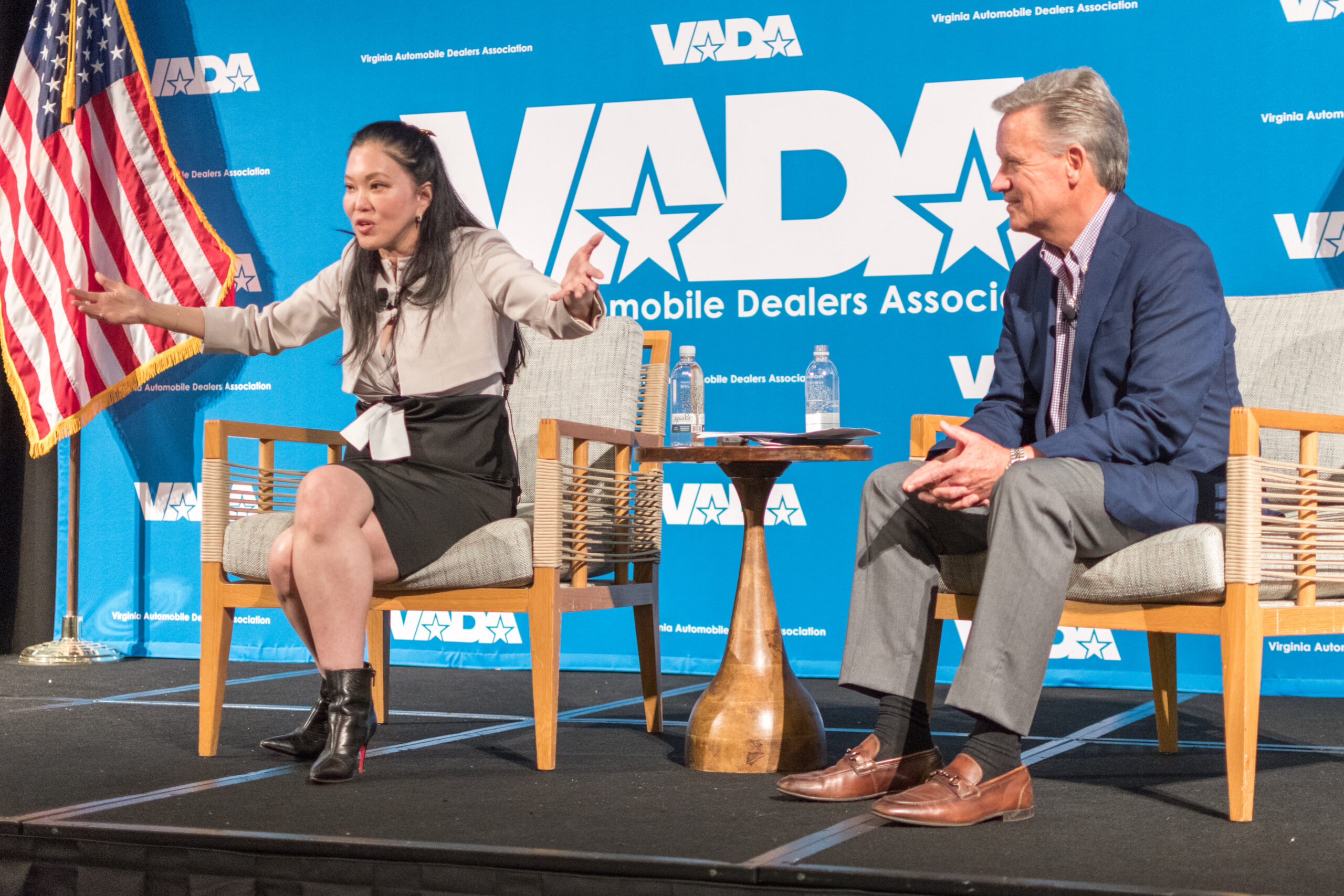
Diana Lee, CEO of Constellation, elivered a blunt assessment of how automotive retail is approaching marketing, artificial intelligence and customer acquisition. While much of the industry is focused on AI, Lee argued that the more important conversation is about who owns the information powering it.
During a conversation with CBT News co-founder Jim Fitzpatrick at the VADA 2026 Annual Convention, the Constellation founder and CEO delivered a blunt assessment of how automotive retail is approaching marketing, artificial intelligence, and customer acquisition. While much of the industry is focused on AI, Lee argued that the more important conversation is about who owns the information powering it.
Message 1: Stop giving away your most valuable asset
For Lee, the industry's biggest blind spot is data ownership.
She criticized marketing arrangements in which vendors retain control of advertising accounts and historical campaign data, forcing dealers to start over whenever they switch providers.
"If you don't own your own data right now and you don't care about it, I don't know what to tell you," Lee said.
She argued that dealers should maintain access to their advertising accounts and performance history regardless of which vendor they choose to work with.
"Every single time you switch vendors because you're like, 'I had a bad month, I'm going to switch the vendor,' you have to start over again," she said. "It's a machine learning model."
The issue isn't simply transparency. In an AI-driven world, historical data becomes more valuable over time. Losing access to it means losing the ability to learn from it.
Message 2: AI is changing how customers find vehicles
While much of the automotive industry is still focused on websites, Lee believes consumers are moving toward AI-powered search tools.
"Websites are of the past and bots are of the future," she said.
That shift has major implications for dealerships. AI tools can only surface information that exists online and is easy to access. If inventory, pricing and incentives are difficult to find, dealers may disappear from the conversation entirely.
"If you don't put something up there, there's nothing to read," Lee said. "If there's nothing to read, you're not even close."
Lee pointed to a review of more than 100 dealership websites in which nearly half lacked pricing information midway through the month. In her view, that is no longer just a marketing problem — it is a visibility problem.
Message 3: Data should drive decisions, not habits
Lee challenged dealers to rethink how they make pricing and merchandising decisions.
Her company analyzes inventory, pricing, and offer data from thousands of dealership websites across the country, giving dealers visibility into what competitors are advertising and what is actually selling in their markets.
Too often, she said, pricing decisions are based on habit rather than market intelligence. Recalling conversations with dealers, Lee said she often asks a simple question: Why was a particular payment chosen for a vehicle promotion?
"Why did you pick $299?" she said. "The answer always back to me was, 'That's what I always do.'"
In an era where dealers can compare pricing, inventory levels, incentives and competitive offers in real time, Lee argued that decisions should be driven by data rather than tradition. What worked last month — or last year — may no longer be the most competitive offer in today's market.
Lee's bottom line
Dealers who own their data, make information accessible and embrace transparency will be positioned to benefit from AI-powered shopping. Those who don't risk becoming invisible in a marketplace increasingly shaped by algorithms.
In Lee's view, the question is no longer whether AI will change automotive retail, but whether dealers will control the data that drives it. "If you don't own your own data right now and you don't care about it," she said, "I don't know what to tell you."